Mattresses rarely get much thought, yet they have a greater impact on your health than your daily cup of tea. Most people are shocked to discover that the typical mattress should only last about 8 years before it needs replacing. Still, here’s what most never expect: some mattresses fall apart in just five years, while others can keep you comfortable for well over a decade. The twist is that the deciding factor is not always the price or brand but how you use and look after it — something that could mean the difference between restless nights and proper sleep.
| Takeaway | Explanation |
|---|---|
| Average Lifespan is Key | Most mattresses should ideally be replaced every 8 years, although actual lifespan varies based on factors like material type and usage patterns. |
| Signs for Replacement | Look for indicators such as sagging, audible springs, or increased pain upon waking, which suggest a need for a new mattress. |
| Maintenance Matters | Regular rotation, using a mattress protector, and controlling humidity can significantly prolong mattress lifespan. |
| Understand Material Impact | Different materials have varying durability; for example, latex mattresses can last 10-15 years, whereas innerspring options may only last 5-7 years. |
| Assess Health Indicators | Pay attention to body signals like morning aches or increased allergies, as these can indicate a worn-out mattress affecting your health. |
Understanding the typical mattress lifespan is crucial for maintaining optimal sleep quality and making informed purchasing decisions. Most people are unaware that mattresses have a definitive lifecycle that impacts their comfort, support, and overall health.
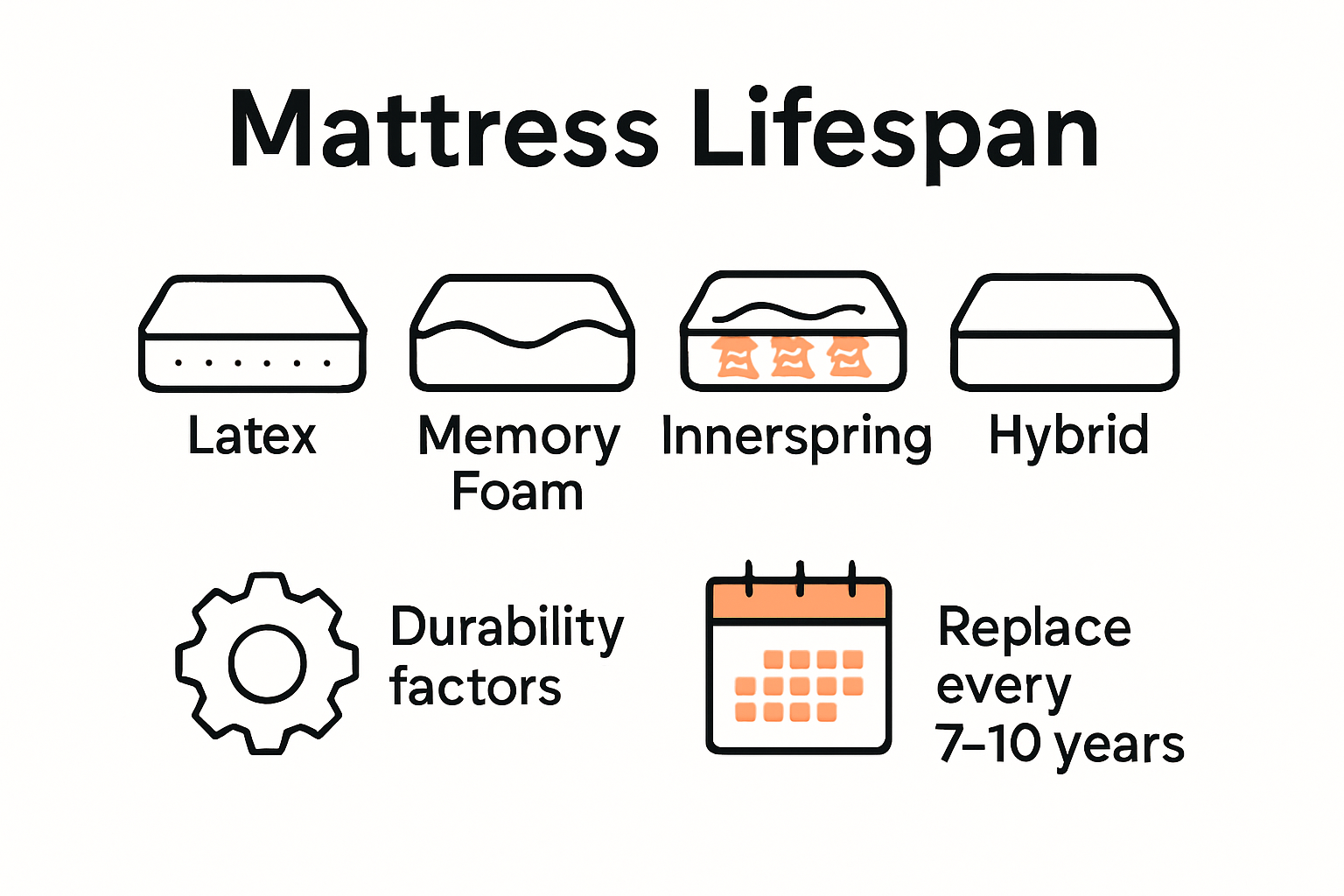
The average mattress lifespan isn’t a one-size-fits-all metric. Multiple elements influence how long your mattress will remain supportive and comfortable. Learn more about mattress materials that impact durability and performance.
According to the National Bed Federation, most mattresses should be replaced after approximately 8 years. This recommendation stems from extensive research tracking mattress performance and sleep quality. However, the actual lifespan varies significantly depending on several key considerations:
Bed Advice UK recommends watching for specific indicators that suggest it is time to invest in a new mattress. Physical signs of wear include:
The Sleep Hero research highlights that mattress type significantly impacts longevity. Memory foam and hybrid mattresses generally provide 8-10 years of quality sleep, while pocket sprung options might require replacement closer to the 6-8 year mark.
Practical considerations extend beyond mere comfort. An aging mattress can harbour dust mites, accumulate allergens, and compromise your sleep environment. Regular assessment and timely replacement are essential for maintaining optimal sleep hygiene and overall health.
While manufacturers often suggest an 8-year replacement cycle, individual experiences may vary. Factors like mattress quality, maintenance, and personal usage will ultimately determine your specific mattress lifespan. Investing in a high-quality mattress and practising proper care can help extend its useful life and ensure continued comfort and support.
Mattress longevity is not a simple matter of time but a complex interplay of multiple critical factors. Understanding these elements can help you protect your investment and ensure optimal sleep quality for years to come. Explore our comprehensive guide to mattress materials to make informed choices about durability.
The fundamental determinant of mattress lifespan is its material composition. According to Luxe Mattresses research, different mattress materials exhibit dramatically different durability profiles:
Denser materials and higher quality construction directly correlate with extended mattress life. Cheaper materials compress more quickly, losing support and comfort at an accelerated rate.
Mattress Firm experts highlight that usage frequency dramatically impacts mattress durability. A mattress in a primary bedroom experiences substantially more stress compared to one in a guest room. Key usage factors include:
Proper mattress care extends far beyond occasional cleaning. How Mattress Affects Sleep Quality research suggests environmental conditions play a crucial role in mattress longevity:
Understanding these factors empowers you to make strategic decisions about mattress care and replacement. While manufacturers provide general guidelines, individual experiences vary based on specific usage patterns and maintenance practices. Investing time in proper mattress care can significantly extend its functional lifespan, ensuring consistent comfort and support throughout the years.
Recognising when your mattress has reached the end of its functional life is crucial for maintaining optimal sleep health and comfort. Most people continue sleeping on deteriorating mattresses without realising the significant impact on their overall well-being. Discover the latest mattress options to understand when and why replacement becomes necessary.
Luxe Mattresses research reveals several critical physical signs that indicate your mattress needs replacing. Visual and tactile changes are the most immediate indicators of mattress degradation:
DB2U Comfort Experts highlight that your body provides the most important signals about mattress condition. Pay attention to these critical health indicators:
Beyond physical comfort, mattress performance encompasses broader health and hygiene factors. Accumulation of dust mites, allergens, and bacterial growth can significantly impact your sleeping environment. Research indicates that mattresses over seven to eight years old become potential breeding grounds for microscopic organisms.
Additional performance indicators include:
While manufacturers provide general guidelines, individual mattress lifecycle depends on multiple factors. Regular assessment of your mattress’s condition ensures you maintain an optimal sleep environment. Investing in a new mattress is not merely about comfort but about protecting your long-term health and well-being.
Remember that mattress replacement is a personal decision influenced by individual sleep patterns, physical health, and comfort preferences. Trust your body’s signals and do not hesitate to invest in a mattress that supports your nightly recovery and overall health.
Extending the life of your mattress requires strategic care and proactive maintenance. Discover how investing in quality can transform your sleep experience and protect your mattress for years to come.
Luxe Mattresses research reveals that consistent maintenance is crucial for preserving mattress quality. Key strategies include:
Comodo Living experts emphasise the importance of creating a protective barrier for your mattress. Critical protective strategies include:
Your mattress’s environment plays a significant role in its longevity. Mattress Care Guidelines suggest several environmental factors to consider:
Additional care tips include avoiding eating in bed, keeping pets off the mattress, and using appropriate cleaning methods. Spot cleaning with mild detergent and avoiding harsh chemicals can prevent material breakdown.
Understanding that prevention is more cost-effective than replacement, these strategies can significantly extend your mattress’s functional life. While no mattress lasts indefinitely, thoughtful care can help you maximise your investment and maintain optimal sleep quality. Regular assessment and proactive maintenance are key to ensuring your mattress remains a comfortable and supportive sleep surface for years to come.
Most mattresses should ideally be replaced every 8 years, although this can vary based on the material and usage patterns.
Look for signs such as sagging, increased pain upon waking, visible wear and tear, or difficulty in sleeping comfortably.
Key factors include the quality of materials, usage patterns, body weight, maintenance practices, and environmental conditions.
Regularly rotate your mattress, use a protective cover, maintain optimal room humidity, and avoid jumping on the bed to prolong its life.
You have just learned that even the highest-quality mattress has a limited lifespan and ignoring signs like sagging or waking with aches can quietly undermine your wellbeing. If you have noticed any of the signs mentioned—whether it is visible dips, restless nights or morning back pain—do not wait for your sleep to suffer another year. The solution is easier and more affordable than you think.
Explore our wide collection of expertly crafted mattresses, with options designed for every need and budget. Whether you crave the soothing contour of Memory Foam or the trusted support of Pocket Sprung, Number One Beds helps you wake up comfortable and refreshed. Choose better sleep for 2025—visit our shop today and invest in a mattress that truly supports you night after night.
