
Getting a comfortable bed is more than just choosing soft sheets or a stylish headboard. Here’s something surprising. The average person spends roughly one third of their life in bed yet most people never optimise their sleeping space for proper rest. A simple mattress swap or the right layering technique can actually transform your sleep and leave you feeling more rested than the fanciest gadget. Curious how small changes make such a big difference? The real secrets to a comfy bed might not be what you think.
| Takeaway | Explanation |
|---|---|
| Choose the Right Mattress and Base | Selecting a mattress that matches your sleep style and physical needs is crucial for comfort and spinal alignment. Consider mattress types like memory foam for pressure relief or spring mattresses for firmer support. Matching your mattress with an appropriate bed base enhances overall comfort and longevity. |
| Maximise Comfort with Layering | Create optimal comfort by using various bedding layers such as fitted sheets, mattress toppers, and appropriate duvets based on seasonal temperatures. Layering improves not only the aesthetic of your bed but also contributes to temperature regulation and overall comfort during sleep. |
| Use the Right Pillows for Support | Select pillows based on your sleeping position to ensure proper neck and spine support, preventing discomfort. Different materials like memory foam and cotton can enhance support and maintain hygiene with regular maintenance. |
| Implement Consistent Maintenance Practices | Regularly wash bedding, rotate your mattress, and use mattress protectors to keep your bed hygienic and supportive. Proper care extends the life of your mattress and ensures a comfortable sleep environment year-round. |
| Stylish and Functional Bedding Adjustments | Styling involves choosing harmonious colours and various textures for visual appeal while considering practical flexibility for temperature management. Seasonal beds can enhance comfort, creating an inviting sanctuary for rest. |
Creating a comfortable bed starts with selecting the right mattress and base – the fundamental elements that determine your sleep quality and overall comfort. Your choice impacts everything from spinal alignment to nightly relaxation, making it crucial to understand how these components work together.
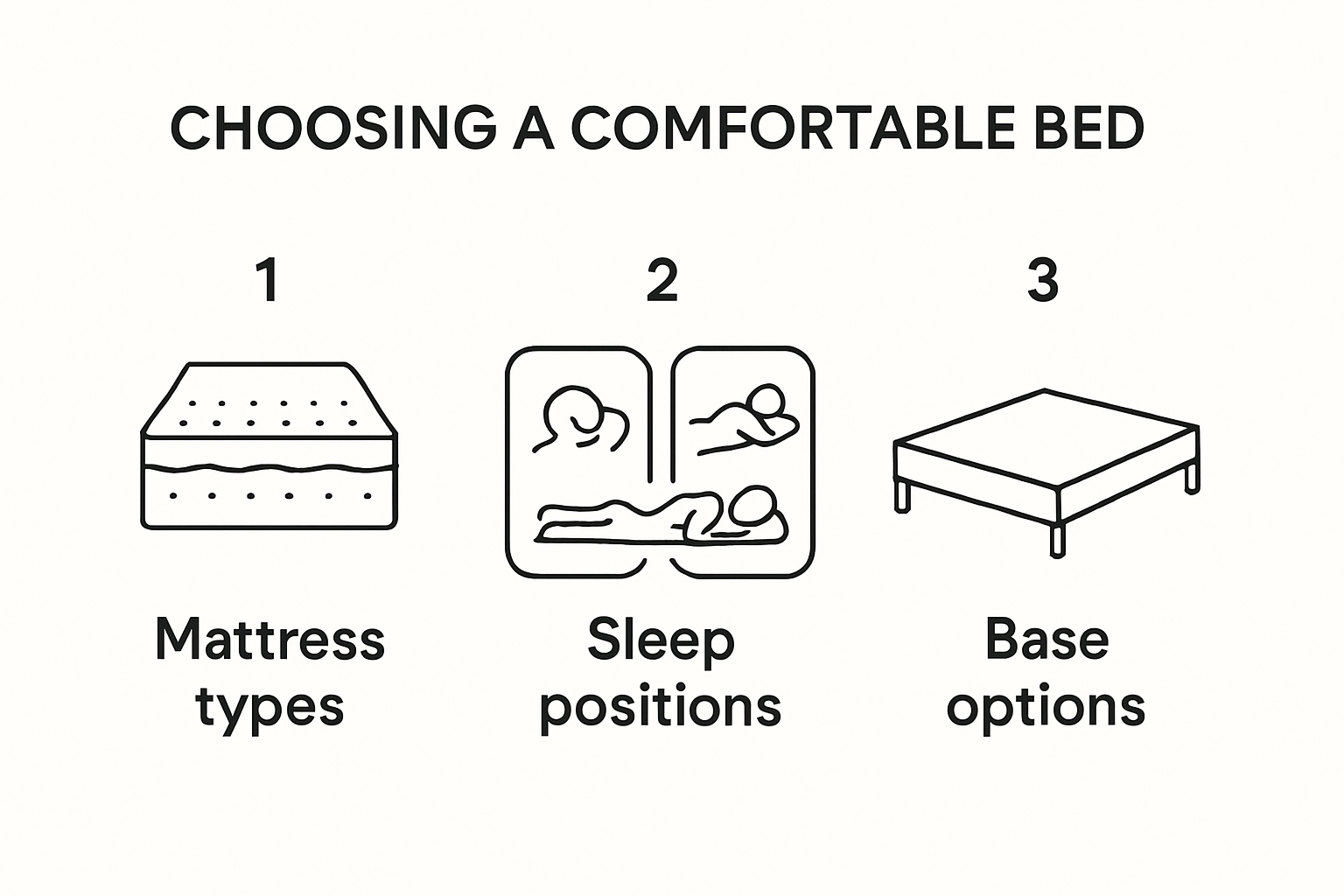
The world of mattresses is diverse, with each type offering unique benefits. Memory foam mattresses have gained significant popularity for their pressure-relieving properties. Explore our comprehensive guide on mattress types to understand the nuanced differences.
According to sleep experts, the best quality memory foam mattresses typically feature a memory foam layer between 5–10cm thick, with a density of 50–60kg/m³. These specifications ensure optimal support and comfort. Natural materials like wool and cotton are recommended for breathable covers, enhancing the overall sleeping experience.
Pricing varies significantly across mattress types. Mid-range options like memory foam and hybrid mattresses offer excellent value, typically ranging from £400 to £1,200. Handcrafted mattresses using natural materials sit at a higher price point, reflecting their superior craftsmanship and material quality.
Your sleep position and body type play critical roles in mattress selection. Side sleepers often benefit from softer mattresses that cushion pressure points around hips and shoulders. Back and stomach sleepers typically require firmer surfaces that maintain proper spinal alignment.
Consider your specific physical needs. People with back pain might need orthopaedic support, while those with temperature regulation issues could benefit from mattresses with cooling technologies. Read our guide on selecting the perfect mattress base to understand how different foundations complement various mattress types.
Trusted UK brands like Vispring and Hypnos are renowned for their natural material craftsmanship, while newer brands such as Emma and Simba offer innovative technological solutions. The key is finding a balance between comfort, support, and your personal sleeping preferences.
The foundation beneath your mattress is equally important. Divan bases provide solid, even support and often include practical storage drawers. Slatted bases offer enhanced ventilation, which can help regulate mattress temperature and extend its lifespan.
Ottoman beds present an excellent solution for those with limited space, offering substantial hidden storage while maintaining a sleek aesthetic. Platform beds work wonderfully with memory foam and latex mattresses, providing a firm, consistent base that prevents sagging.
Remember that your mattress and base should work in harmony. A mismatched combination can lead to reduced comfort, accelerated wear, and potential disruptions to your sleep quality. Investing time in selecting complementary pieces will transform your bedroom into a sanctuary of rest and rejuvenation.
By understanding these crucial elements and making informed choices, you can create a bed that not only looks inviting but provides the supportive, comfortable sleep environment your body deserves.
Creating a truly comfortable bed is an art form that goes beyond selecting the right mattress. Bedding layers are the secret weapon in transforming your sleep space from ordinary to extraordinary, providing both aesthetic appeal and functional comfort.

The journey to a perfectly comfortable bed begins with your base layers. A high-quality fitted sheet acts as the critical first line of comfort, directly touching your skin and providing a smooth, protective surface. Discover our expert tips for creating the perfect bed setup to understand how each layer contributes to your overall sleep experience.
According to bedding experts, adding a mattress topper can dramatically enhance your bed’s comfort. These ingenious layers contour to your body, relieving pressure points and making even older mattresses feel refreshed. Choose toppers made from memory foam, wool, or down alternative materials to add an extra cushioning layer that transforms your sleeping surface.
Top sheets remain a personal preference, but they offer an additional layer of comfort and hygiene. Opt for breathable, natural fabrics like cotton or linen that feel soft against the skin and help regulate temperature throughout the night.
Temperature management is crucial for a comfortable night’s sleep. According to recent UK bedding trends, the key is versatility. For maximum cosiness, create a layering system that adapts to seasonal changes. In winter, choose higher-tog duvets that provide substantial warmth, while lighter options work best during warmer months.
Consider a combination approach. Start with a lightweight blanket or throw that can be easily added or removed. Textile experts from Living Etc suggest incorporating textured throws and quilted layers as both a practical and aesthetic choice for 2025. These additional layers not only provide warmth but also create visual depth and interest in your bedroom.
Pillows are more than just decorative elements – they’re critical to overall bed comfort. Invest in a variety of pillows with different levels of support. A combination of firm supporting pillows and softer, more plush options allows you to create a personalised comfort zone. Down or down-alternative pillows offer luxurious softness, while memory foam provides structured support for those with neck or shoulder concerns.
Modern bedding trends emphasize personalisation. Mix and match textures, incorporating different fabrics like velvet, cotton, and linen. Decorative cushions and throws add personality while providing additional warmth and comfort. The goal is to create a bed that looks inviting and feels even better.
Remember that comfort is deeply personal. What works perfectly for one person might not suit another. Experiment with different layers, textures, and combinations until you find your ideal sleep setup. Your bed should be a sanctuary – a place of ultimate comfort, relaxation, and rejuvenation.
Pillows are far more than decorative bedroom accessories – they are critical components of sleep health and comfort. The right pillow can transform your sleep experience, providing essential support for your head, neck, and spine while preventing discomfort and potential long-term musculoskeletal issues.
Your preferred sleeping position dramatically influences the type of pillow support you require. Explore our comprehensive guide to matching pillows with sleep styles to discover personalized comfort solutions.
Side sleepers typically need higher, firmer pillows that fill the gap between the shoulder and head, maintaining proper spinal alignment. These pillows should provide enough loft to keep the neck and spine in a neutral position, preventing unnecessary strain. Memory foam or contoured pillows work exceptionally well for this sleep style, offering responsive support that adapts to individual neck and shoulder curves.
Back sleepers benefit from medium-height pillows that support the natural curvature of the cervical spine. According to pillow experts, these pillows should provide gentle support without pushing the head too far forward, which can create uncomfortable neck tension.
Stomach sleepers require the thinnest pillows to prevent neck hyperextension. Soft, almost flat pillows help maintain a more neutral spine position, reducing potential morning stiffness and discomfort.
Pillow materials play a crucial role in comfort and support. Cotton pillows stand out as an excellent choice, offering natural hypoallergenic properties that resist dust mites and mold. This makes them particularly beneficial for individuals with allergies or sensitive skin.
Memory foam pillows provide exceptional contouring support, molding to the unique shape of your head and neck. They excel at distributing weight evenly and reducing pressure points. Latex pillows offer similar contouring benefits with added breathability and a slightly bouncier feel.
Down and down-alternative pillows provide luxurious softness and can be easily adjusted by shifting the filling. However, they might not offer the same level of consistent support as memory foam or latex options. Wool-filled pillows present an excellent middle ground, offering natural temperature regulation and moderate support.
Standard UK pillow sizes typically range from 50cm x 75cm for most beds to 50cm x 90cm for super king or emperor beds. Scooms pillow guide recommends considering both pillow size and your bed dimensions when making a selection.
Regular pillow maintenance is crucial for maintaining comfort and hygiene. Wash pillow covers weekly and replace entire pillows every 1-2 years. Signs that it’s time for a replacement include permanent lumps, decreased support, or visible wear and tear.
Remember that pillow comfort is highly personal. What works perfectly for one person might feel uncomfortable for another. Don’t hesitate to experiment with different materials, heights, and firmness levels until you discover your ideal sleep companion.
Investing time and thought into selecting the right pillows is an investment in your overall sleep quality, health, and daily well-being. Your pillows are the foundation of a truly restful night’s sleep.
Creating a comfortable bed is an ongoing process that extends far beyond initial selection. Proper styling and consistent maintenance are crucial to preserving the comfort, appearance, and longevity of your sleeping sanctuary.
Styling your bed is both an art and a science. Discover professional bed styling tips that transform your bedroom into a cohesive, inviting space. According to Luxury Lifestyle Magazine, selecting a harmonious colour theme that complements your existing bedroom décor can significantly enhance the overall comfort and aesthetic appeal of your sleeping area.
Layering different textures becomes key to creating visual depth and tactile comfort. Crafted Beds experts recommend combining various fabrics like quilts, duvets, comforters, and throws. This approach not only adds visual interest but also provides practical flexibility in temperature regulation.
Consider creating a colour palette that reflects tranquillity. Soft, muted tones like sage green, dusty blue, and warm neutrals can create a soothing environment that promotes relaxation and comfort.
Maintaining your bed’s comfort requires consistent care and attention. Bedding hygiene is paramount – experts recommend washing sheets, pillowcases, and duvet covers weekly. This practice eliminates accumulated dust, skin cells, and potential allergens, keeping your sleeping environment fresh and clean.
Rotate and flip your mattress every three to six months to ensure even wear. This simple technique prevents permanent indentations and extends the mattress’s lifespan. For memory foam mattresses, rotating is typically sufficient, while traditional spring mattresses benefit from both rotating and flipping.
Protective accessories play a crucial role in maintenance. Invest in high-quality mattress protectors that guard against spills, stains, and dust mites. These barriers not only preserve your mattress but also contribute to a more hygienic sleeping environment.
Adapting your bedding to seasonal changes ensures year-round comfort. During winter months, incorporate heavier, warmer layers like thick duvets and flannel sheets. Summer requires lighter, breathable fabrics that promote air circulation and prevent overheating.
Pay attention to pillow and duvet care. Most down and synthetic-filled items can be machine washed, but always check manufacturer instructions. Professional cleaning every 18-24 months can help maintain their loft and comfort properties.
Storage matters too. When not in use, store extra bedding in cool, dry places. Use breathable cotton bags instead of plastic, which can trap moisture and potentially lead to mildew.
Remember, a comfortable bed is an investment in your health and well-being. By implementing these styling and maintenance strategies, you create a consistently inviting sleep environment that adapts to your changing needs. Small, consistent efforts can transform your bed from merely functional to a true sanctuary of rest and rejuvenation.
Side sleepers typically benefit from softer mattresses that cushion pressure points around the hips and shoulders. Memory foam or latex mattresses are often recommended for their contouring support.
To achieve optimal comfort, start with a quality fitted sheet, add a mattress topper for extra cushioning, and choose seasonal duvets that suit the temperature. Incorporate breathable fabrics like cotton or linen for a comfortable sleep experience.
It is advisable to replace your pillows every 1-2 years. Signs that it’s time for a replacement include lumps, decreased support, and visible wear and tear.
Regularly wash bedding weekly, rotate your mattress every three to six months, and invest in a quality mattress protector to maintain hygiene and comfort.
Do you ever wake up feeling groggy, despite following every cosy sleep tip? The article above revealed how the real secret to restful sleep lies in combining the right mattress, supportive pillows, and layered bedding. But finding the perfect balance of comfort, support and style is tough when options are overwhelming. Too many people still struggle with unsupportive mattresses, scratchy bedding and mismatched bases that sabotage their sanctuary.
Your dream bed isn’t out of reach. At Number One Beds, we help you turn sleep advice into practical upgrades with everything under one roof:

Why settle for restless nights or back aches when the answer is simple? Browse Number One Beds now and see how easy it is to create your perfect bed. Treat yourself to true comfort and support – because your best sleep starts today.
