Choosing bedding in 2025 is not just about comfort. Bedding can actually impact allergies, sleep quality, and even your environmental footprint. Here is a shocker. Tencel sheets have a 50 percent smaller carbon footprint than traditional cotton, and wool is naturally resistant to dust mites, mould, and bacteria. Most people focus on thread count or colours, but the real power lies in the material itself. Some modern fabrics now adapt to your body temperature, offer hypoallergenic properties, and are kinder to the planet. The best bedding for your family could be a material you have never even considered.
| Takeaway | Explanation |
|---|---|
| Natural Fibres Are Key | Natural fibres like Egyptian cotton and organic cotton are preferred for their durability, hypoallergenic properties, and comfort, making them ideal for health-conscious consumers. |
| Performance Materials Include Tencel and Bamboo | Innovative materials such as Tencel and bamboo-derived fabrics offer excellent moisture-wicking and temperature regulation capabilities, catering to diverse sleeping needs. |
| Sheet Fit Matters | Deep-fitted sheets are crucial for modern mattresses, especially for those using toppers, to ensure a smooth sleeping surface and avoid slipping. |
| Consider Lifestyle and Maintenance Needs | Families or individuals with specific lifestyles should choose bedding materials that balance ease of care, durability, and aesthetic appeal, such as brushed cotton for warmth or microfibre for convenience. |
| Sustainability Is Increasingly Important | Consumers should look for organic and sustainably produced materials like Tencel and wool to align their bedding choices with their environmental values. |
Choosing the right bedding material is more than a matter of comfort—it’s about creating a sleep environment that supports your health, lifestyle, and personal preferences. In 2025, consumers have an unprecedented range of bedding materials that balance performance, sustainability, and aesthetic appeal.
Natural fibres continue to dominate the bedding market, with cotton and its variations leading the charge. Discover our expert guide to selecting premium bedding for a deeper understanding of material selection.
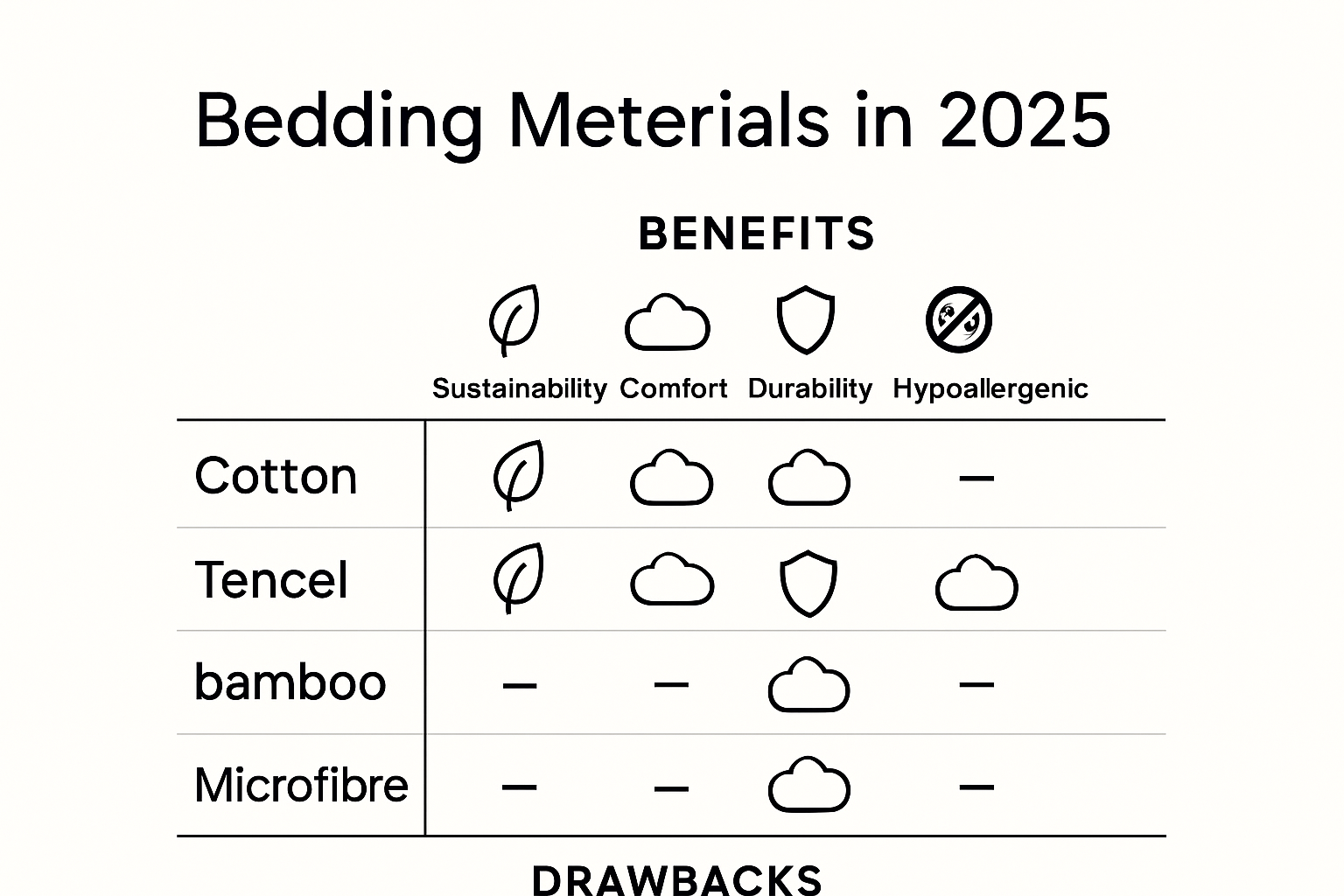
Egyptian cotton remains the gold standard for luxury bedding. According to Sienna Living, its long, silky fibres provide exceptional durability and a premium feel that discerning sleepers appreciate. Organic cotton has gained significant traction, offering hypoallergenic properties that appeal to environmentally conscious consumers and those with sensitive skin.
Percale cotton stands out for hot sleepers, featuring a tight weave that creates a lightweight, breathable fabric with a cool, crisp feel. This makes it particularly attractive for individuals who struggle with night sweats or live in warmer climates.
Tencel has emerged as a revolutionary bedding material, offering remarkable environmental credentials. Research from DTex Homes highlights that Tencel production has a 50% smaller carbon footprint compared to traditional cotton. This eco-friendly fabric is not just environmentally responsible but also provides exceptional moisture-wicking properties and a silky smooth texture.
Synthetic materials like microfibre have also evolved, offering budget-friendly alternatives with impressive performance. These materials provide excellent durability, easy maintenance, and often come at a fraction of the cost of premium natural fibres. Modern microfibre can mimic the softness of natural fabrics while offering superior resistance to wrinkles and stains.
The bedding market in 2025 is characterized by a nuanced understanding that different sleepers have different needs. Bamboo-derived fabrics, for instance, offer natural temperature regulation and antimicrobial properties. These materials are particularly beneficial for individuals with allergies or those seeking a more hygienic sleep environment.
Memory foam-infused bedding materials represent another innovative frontier. By incorporating cooling gel technologies and breathable fabrics, these materials address common complaints about heat retention while providing exceptional pressure point relief.
Consumers in 2025 are no longer satisfied with one-size-fits-all solutions. The most successful bedding materials will be those that offer a personalized sleep experience, combining comfort, sustainability, and technological innovation. Whether you prioritize eco-friendliness, temperature regulation, or pure luxurious comfort, there’s a bedding material perfectly suited to your unique requirements.
Selecting the perfect bed sheets is an art that combines personal comfort, practical considerations, and aesthetic preferences. In 2025, sheet selection goes far beyond simple thread count, encompassing material quality, performance characteristics, and individual sleeping needs.
Thread count has long been considered the gold standard for sheet quality, but modern consumers understand it’s not the only factor. Learn more about our bedding selection expertise to make an informed choice. According to Harper’s Bazaar, natural materials like Egyptian cotton remain top performers, with 400 and 600 thread count varieties offering exceptional comfort and durability.
The best overall bed sheet for 2025, as identified by The English Home, is a 600 thread count Egyptian cotton sheet. This premium option provides a luxurious feel while ensuring long-lasting performance. For budget-conscious shoppers, a 400 thread count Egyptian cotton sateen sheet offers an excellent balance of quality and affordability.
Sheet fit has become increasingly important in 2025. Olivia Rocco recommends deep-fitted sheets with elastic that extends completely around the mattress. This design is crucial for those using mattress toppers or sleeping on thicker mattresses, preventing sheets from slipping and ensuring a smooth, comfortable sleeping surface.
Different sleeping environments demand different sheet characteristics. Hot sleepers benefit from breathable materials like linen and lightweight cotton, while those in cooler climates might prefer flannel or jersey knit sheets that provide additional warmth. Individuals with sensitive skin should consider hypoallergenic options such as organic cotton or bamboo-derived fabrics.
Beyond comfort, modern sheet selection involves considering your broader lifestyle needs. Families with young children might prioritize easy-care materials that withstand frequent washing. Those concerned about environmental impact can choose organic or sustainably produced materials like Tencel or organic cotton.
Colour and design have also become crucial selection criteria. Sheets are no longer just functional items but integral components of bedroom aesthetics. Consider how your sheet choice complements your existing decor, with options ranging from crisp white classics to bold, contemporary patterns.
Ultimately, choosing the right sheets is a personal journey. Consider your sleeping habits, comfort preferences, maintenance capabilities, and aesthetic desires. Whether you prioritize luxury, practicality, sustainability, or a combination of these factors, the perfect sheet set exists to transform your sleeping experience in 2025.
Health and comfort are no longer luxury considerations in bedding—they are essential requirements for modern sleep environments. In 2025, consumers are increasingly seeking bedding materials that support physical wellness, promote better sleep quality, and contribute to overall well-being.
Discover our expert recommendations for wellness-focused bedding that prioritize your health. British wool emerges as a standout material for health-conscious sleepers. According to Putnams, wool bedding is naturally resistant to dust mites, mould, and bacteria, making it an exceptional option for individuals with allergies or respiratory sensitivities.
Organic cotton represents another powerful health-focused bedding option. DTex Homes highlights that organic cotton is grown without harmful chemicals or pesticides, ensuring a cleaner, safer sleeping environment. This makes it particularly beneficial for those with sensitive skin, children, and environmentally conscious consumers who prioritize both personal and ecological health.
Tencel, derived from eucalyptus wood pulp, stands at the forefront of health-oriented bedding materials. Sienna Living reports that Tencel has a 50% smaller carbon footprint compared to traditional cotton while offering superior moisture-wicking properties. This innovative fabric helps regulate body temperature, reducing night sweats and creating a more comfortable sleep environment.
Memory foam and gel-infused bedding materials have also evolved to address specific health concerns. These advanced materials provide targeted support for pressure points, potentially alleviating back pain and improving overall sleep posture. Some innovative designs now incorporate cooling technologies that help manage body temperature, addressing common sleep disruptions caused by overheating.
Choosing bedding in 2025 goes beyond mere aesthetic preferences. It involves understanding individual health needs, sleep patterns, and environmental considerations. Hypoallergenic materials like bamboo and silk offer additional benefits for those with sensitive skin or respiratory conditions.
Consider factors such as your typical body temperature, potential allergies, and specific physical requirements when selecting bedding. Someone with chronic back pain might benefit from different materials compared to a hot sleeper or an individual with sensitive skin.
The intersection of technology, sustainability, and health has transformed bedding from a simple comfort item to a critical component of personal wellness. By selecting materials that support physical health, regulate temperature, and minimise environmental impact, you can create a sleep environment that truly nurtures your body and mind.
In 2025, bedding is no longer a one-size-fits-all solution. Different lifestyles demand unique bedding approaches that cater to specific needs, comfort preferences, and practical considerations. Explore our comprehensive guide to personalised bedding solutions to find your perfect match.
According to Harper’s Bazaar, natural materials like linen, cotton, and silk remain the gold standard for versatile bedding. Each material offers distinct advantages for different lifestyle requirements.
Linen emerges as the ultimate choice for hot sleepers and those living in warmer climates. Its exceptional breathability and moisture-wicking properties ensure comfortable sleep even during summer months. Professionals working in high-stress environments or individuals with active lifestyles will appreciate linens natural temperature-regulating qualities, which help maintain a consistent body temperature throughout the night.
Cotton provides unparalleled versatility for families and individuals seeking practical, low-maintenance bedding. Its durability, easy washability, and ability to withstand frequent use make it ideal for households with children, pets, or those who prioritise convenience. The English Home recommends brushed cotton sheets for families seeking warmth and cosiness, particularly during winter months. However, they caution that these sheets require gentle washing to prevent pilling.
For individuals with specific health considerations or unique living environments, material selection becomes even more critical. Silk bedding offers remarkable hypoallergenic properties, making it an excellent choice for those with sensitive skin, allergies, or respiratory conditions. Its smooth texture reduces friction, potentially benefiting individuals with skin sensitivities or those seeking to minimise hair and skin damage during sleep.
Students, young professionals, and frequent travellers might prioritise lightweight, quick-drying materials like microfibre. These synthetic fabrics are not only affordable but also easy to maintain, pack, and wash—perfect for those with dynamic, mobile lifestyles. Microfibre bedding can withstand multiple washes without losing shape or softness, addressing the practical needs of individuals constantly on the move.
Environmentally conscious consumers are increasingly selecting bedding materials that align with their ethical values. Organic cotton and Tencel represent excellent options for those prioritising sustainability. These materials are produced with minimal environmental impact, using reduced water consumption and avoiding harmful chemicals.
For minimalist living spaces or individuals practicing conscious consumption, investing in high-quality, versatile bedding becomes paramount. Multi-season materials like merino wool offer exceptional temperature regulation, reducing the need for multiple bedding sets. This approach not only simplifies lifestyle management but also supports a more sustainable approach to home textiles.
Ultimately, selecting bedding in 2025 is about understanding your unique lifestyle, comfort requirements, and personal values. Whether you’re a hot sleeper, a busy parent, an environmentally conscious consumer, or someone with specific health needs, there’s a perfect bedding solution waiting to transform your sleep experience.
Natural fibres such as Egyptian cotton and organic cotton are highly recommended for their durability and hypoallergenic properties. Innovative materials like Tencel and bamboo are also excellent due to their moisture-wicking and temperature-regulating capabilities.
Consider the material quality, sheet fit, and your personal preferences. Deep-fitted sheets are essential for thicker mattresses, while breathable fabrics like linen and lightweight cotton are ideal for hot sleepers. Always match your sheets to your lifestyle needs as well.
Yes, options like organic cotton, bamboo-derived fabrics, and silk are known for their hypoallergenic properties. These materials help create a healthier sleep environment, particularly for individuals with allergies or sensitive skin.
Tencel, bamboo, and linen are outstanding for temperature regulation. Tencel, in particular, excels in moisture-wicking, helping to keep you cool throughout the night, while linen’s breathability makes it suitable for warmer climates.
The article highlights an important truth – choosing the best bedding material in 2025 goes far beyond simple comfort. If you are worried about allergies, night sweats, or keeping your family healthy, the material you sleep on matters. Whether you need natural fibres for breathability or high-performance fabrics to help with temperature and moisture regulation, your bedding should support every aspect of your well-being.
Finding materials that match your lifestyle and elevate your sleep can feel overwhelming. That is where Number One Beds comes in. Our selection covers everything from luxurious Memory Foam mattresses for customised comfort to innovative Foam & Manmade Fibres options designed for modern families seeking convenience and value. All are carefully chosen to support health and quality sleep for every household.
Ready to turn sleep science into real rest for your family? Explore our curated collection and see how the right bedding materials can make a real difference. Shop the latest in comfort, technology, and style at Number One Beds now. Your new favourite sleep experience could be just a click away.
