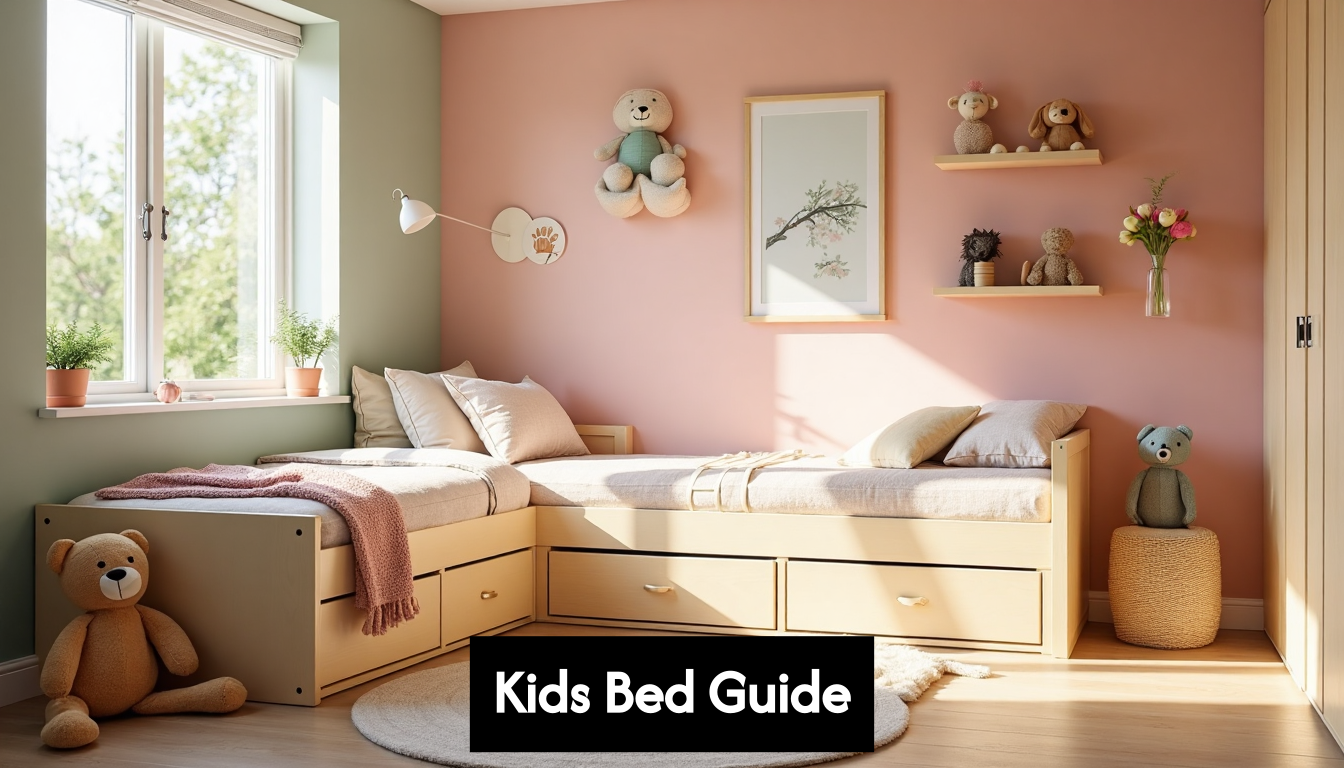
Choosing a kids bed in 2025 means more than picking something cute. Modern designs can actually expand and adapt as your child grows, and some now include clever features like built-in desks or storage compartments. Here is a striking fact: UK guidelines specify that bunk bed guardrails must extend at least 16cm above the mattress, with gaps no larger than 7.5cm to prevent accidents. Yet surprise yourself, because the most overlooked factor is how much the right bed impacts your child’s comfort, development and even emotional wellbeing. The perfect choice blends safety, growth potential and personal space in ways that transform a simple bedroom into their sanctuary.
| Takeaway | Explanation |
|---|---|
| Choose the right size for growth | Opt for beds that accommodate your child’s growth, such as expandable options or modular designs that adapt over time. |
| Prioritise safety and structural integrity | Ensure beds have rounded edges, sturdy construction, and appropriate guardrails to prevent accidents and promote safe sleep environments. |
| Consider comfort and sleep quality | Select a mattress that supports proper spinal alignment and matches age-appropriate sizing to enhance overall sleep quality. |
| Explore innovative and multifunctional designs | Look for beds with built-in storage, study areas, and modular features that maximise space and adapt to changing needs. |
| Incorporate personal expression | Choose beds that reflect your child’s personality, incorporating themes and customisable elements to create a comforting personal sanctuary. |
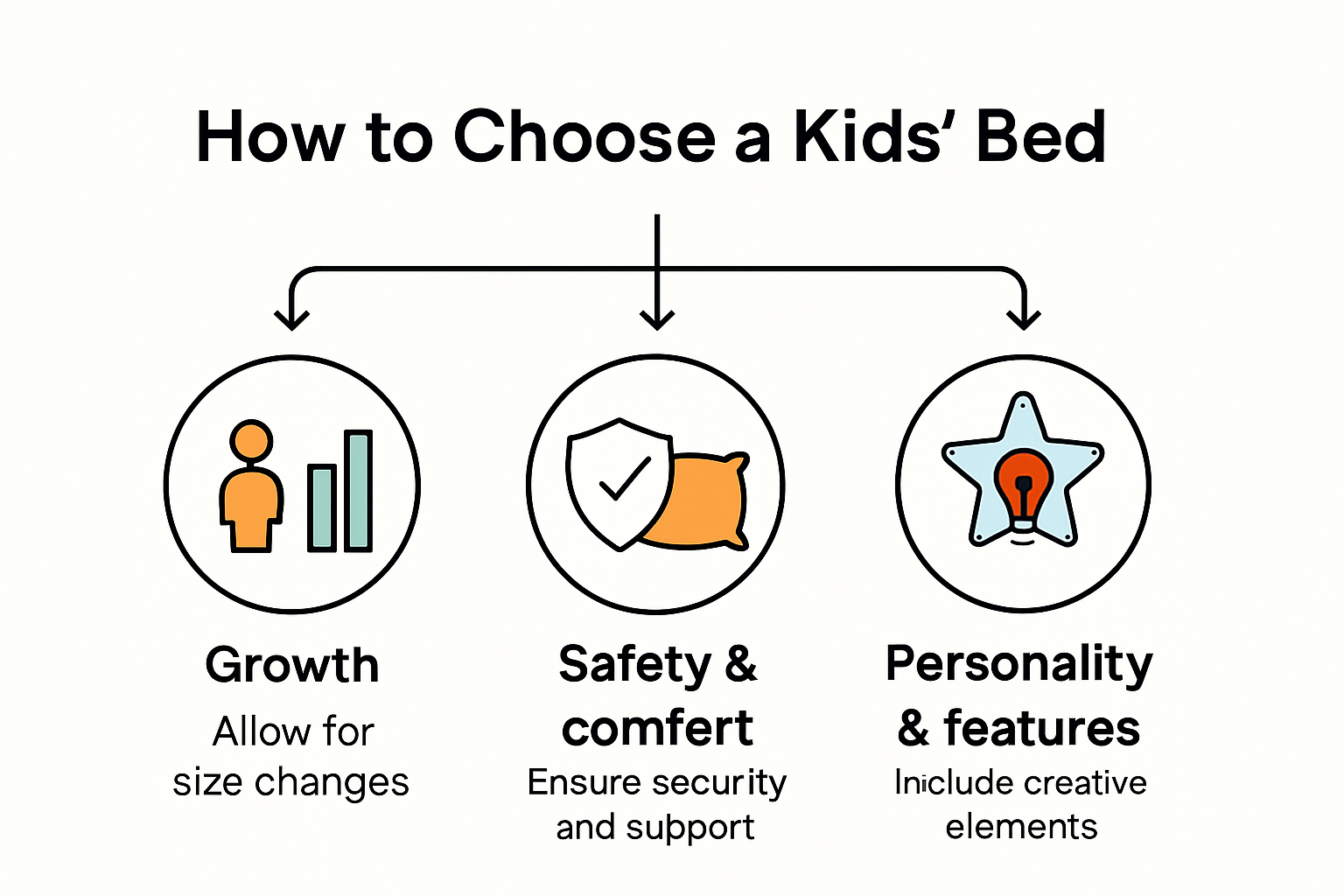
Selecting the right bed for your child involves more than just picking a visually appealing design. It requires careful consideration of multiple factors that impact your child’s comfort, safety, and developmental needs.
Children grow rapidly, making bed selection a strategic investment. Mattress specialists recommend choosing a bed that accommodates your child’s growth trajectory. A single bed typically serves children from around 4 years onwards, providing ample space for comfortable sleep and potential room expansion.
Consider the room’s dimensions and your child’s anticipated growth when selecting bed size. Compact beds work brilliantly in smaller spaces, while expandable options can adapt as your child develops. Some modern bed designs offer modular features that can be adjusted or reconfigured, representing a smart long-term solution for evolving bedroom needs.
Safety remains paramount when choosing a children’s bed. Rounded edges, sturdy construction, and appropriate guardrails are critical elements that prevent potential accidents. Child sleep specialists emphasise the importance of a firm mattress that supports proper spinal alignment while providing comfort.
When evaluating bed structures, assess materials, weight capacity, and potential hazards. Wooden beds with smooth finishes, metal frames with secure joints, and beds with low-profile designs offer excellent safety characteristics. Pay special attention to bed height, ensuring your child can safely enter and exit without risk of falling.
A child’s bed directly impacts their sleep quality and overall well-being. Experts recommend matching bed types to specific age groups: cot beds for 0-2 years, toddler beds for 2-4 years, and single beds for children 4 and older.
Beyond age-appropriate sizing, consider mattress firmness, breathability, and support. A mattress that adapts to your child’s growing body promotes better sleep patterns and supports healthy physical development. Look for beds that offer temperature regulation, hypoallergenic materials, and moisture-wicking properties.
For families seeking versatile solutions, explore our comprehensive guide on storage bed options that combine comfort with practical storage solutions, maximising bedroom functionality.
Ultimately, choosing the right kids bed is about balancing practicality, safety, and comfort. By considering growth potential, prioritising safety features, and understanding your child’s unique sleep needs, you can create a nurturing sleep environment that supports their physical and emotional development.
Choosing the right bed for your child involves understanding the nuanced world of sizes, styles, and practical considerations that transform a simple sleeping space into a functional bedroom sanctuary.
Bed size experts highlight the critical importance of selecting the right dimensions for your child’s age and room layout. In the UK, children’s bed sizes progress through distinct stages: Cot Beds (53cm x 120cm) for infants, Toddler Beds (70cm x 140cm) for ages 2-4, Small Single (76cm x 190cm) for younger children, and Standard Single (90cm x 190cm) for school-age children.
Room dimensions play a crucial role in bed selection. Compact spaces might benefit from space-saving designs like mid-sleepers or cabin beds, while larger rooms can accommodate more expansive bed styles. Our comprehensive bed size guide offers detailed insights into matching bed dimensions with room configurations.
Contemporary children’s bedrooms demand versatility and functionality. Furniture specialists recommend exploring innovative bed styles that adapt to changing needs. Bunk beds provide excellent solutions for shared rooms, while mid-sleepers with integrated storage offer smart space management for compact living spaces.
Consider beds with modular designs that can be reconfigured as your child grows. Some models feature removable side rails, adjustable heights, and convertible frames that transition from toddler to teen configurations. Multifunctional designs incorporate study areas, storage compartments, and play spaces, maximising bedroom utility.
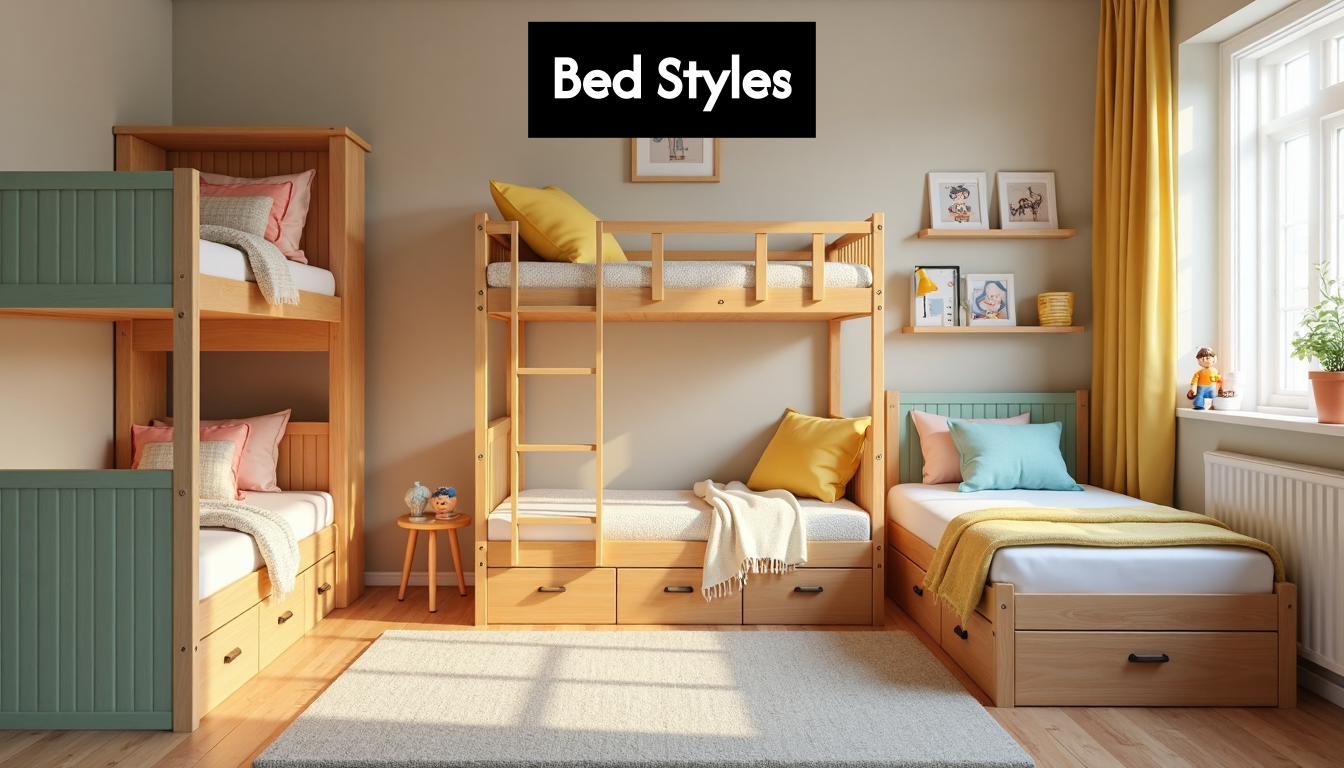
Beyond practical considerations, a child’s bed should reflect their individual personality and interests. Themed beds featuring adventure motifs, character designs, or customisable elements can transform bedtime from a routine into an exciting experience. Consider beds that incorporate built-in lighting, secret compartments, or imaginative design elements that spark creativity.
Our family bed selection guide provides expert recommendations on balancing aesthetic appeal with practical functionality. Look for materials that are durable, easy to clean, and capable of withstanding the energetic lifestyle of growing children.
Selecting the perfect bed is more than a purchase—it’s an investment in your child’s comfort, development, and personal space. By carefully considering size, style, and individual needs, you can create a bedroom environment that grows and adapts alongside your child, providing a nurturing sanctuary for rest, play, and imagination.
Creating a safe and comfortable sleep environment for children goes beyond aesthetic considerations. It requires a comprehensive approach that addresses physical safety, ergonomic support, and developmental needs.
UK safety guidelines establish critical requirements for children’s beds, particularly for bunk beds and raised sleeping configurations. These standards mandate specific design elements such as guardrails extending at least 16cm above the mattress, with no gaps larger than 7.5cm to prevent accidental falls or entrapment.
The Furniture and Furnishings Fire Safety Regulations introduce updated safety protocols for 2025, emphasising the importance of selecting beds that meet current fire safety standards. Parents should prioritise beds constructed with flame-retardant materials and certified safety credentials.
NHS safety experts highlight the critical importance of age-appropriate bedding and sleep surfaces. For infants under one year, this means avoiding soft pillows and duvets that could obstruct breathing. As children grow, their bed should provide progressive support that adapts to their changing physical development.
Consider mattresses with medium-firm support that promotes proper spinal alignment. Breathable materials and temperature-regulating fabrics contribute significantly to sleep quality. Look for beds with orthopaedic mattress options that support growing bodies and help prevent potential posture-related issues.
A child’s bed is more than a sleeping surface—it’s a personal sanctuary that impacts emotional well-being. Design choices that incorporate elements of safety and personal expression can create a sense of security and comfort. Rounded edges, stable construction, and age-appropriate designs help children feel protected and relaxed.
Our comprehensive guide to creating supportive sleep environments offers deeper insights into selecting beds that balance physical safety with psychological comfort. Consider beds with customisable elements that allow children to personalise their space, fostering a sense of ownership and security.
Choosing the right bed is a nuanced process that requires careful consideration of safety standards, ergonomic support, and individual needs. By prioritising these critical factors, parents can create a sleep environment that not only protects their child but also supports healthy physical and emotional development.
In an era of compact living and multifunctional spaces, children’s bedroom furniture has evolved dramatically. Modern parents seek innovative solutions that maximise limited square footage while creating adaptable, engaging environments for growing children.
Contemporary design experts highlight the rising popularity of high sleepers and loft beds that transform bedroom dynamics. These elevated sleeping configurations create valuable underneath spaces for study areas, play zones, or integrated storage solutions. Vertical living strategies allow families to multiply usable space without compromising on comfort or functionality.
Our comprehensive space-saving guide explores how these innovative designs can revolutionise children’s bedrooms. Consider beds with built-in desks, shelving units, or pull-out study areas that seamlessly integrate multiple functions within a single footprint.
Furniture trend forecasters predict 2025 will champion future-proof designs that adapt to children’s changing needs. Imagine beds with hidden storage compartments, desks that fold into treehouse frames, or storage chests that transform into playable stages. Multifunctional furniture becomes a strategic investment, growing alongside your child’s evolving requirements.
Key transformation features to consider include:
Rest and Relax furniture specialists emphasise that 2025’s most innovative children’s beds are not just about sleeping—they’re comprehensive living solutions. Bunk beds with integrated storage drawers, under-bed compartments, and clever organisational systems help maintain a clutter-free environment.
Consider beds featuring:
Choosing a space-saving bed is about balancing practicality with creativity. By selecting furniture that adapts, transforms, and maximises every square centimetre, parents can create dynamic bedroom environments that inspire imagination while meeting the pragmatic challenges of modern living.
Remember, the best space-saving solutions are those that grow with your child, offering flexibility, functionality, and a touch of magic in every design.
Choosing the right size bed for your child depends on their age and growth trajectory. For infants, opt for cot beds, while toddlers require toddler beds. For ages 4 and onwards, a standard single bed (90cm x 190cm) is suitable. Consider room dimensions and look for expandable or modular designs for long-term use.
To ensure safety, select beds with rounded edges, sturdy construction, and compliant guardrails. Bunk beds should have guardrails that extend at least 16cm above the mattress, with gaps no larger than 7.5cm. Always assess materials and bed height to prevent accidents when entering or exiting the bed.
Choose a mattress that offers medium-firm support and promotes proper spinal alignment. Look for breathable materials that provide temperature regulation. Additionally, consider beds that include storage and study areas to enhance overall comfort and functionality.
Incorporate your child’s personality by selecting themed beds or ones with customisable elements. Look for beds that feature adventure motifs or can be personalised with colours and designs that resonate with your child’s interests, making bedtime more enjoyable.
Struggling to find a kids’ bed that’s safe, comfortable, and grows with your little one? If the thought of balancing safety features, room size, and your child’s personality feels overwhelming, you’re not alone. As explored above, choosing the right bed can shape your child’s happiness, safety, and development for years to come. That’s why our Kids’ Beds Collection at Number One Beds has been designed with real families in mind. Here, you can discover beds that blend clever storage, playful designs, and essential safety—all tailored for modern homes and busy lives.
Ready to transform your child’s bedroom into their favourite space? Visit Number One Beds now to explore our full range of kids’ beds, mattresses, and accessories. Shop today for peace of mind and practical comfort that keeps up with every stage of childhood.
