Mattress density shapes more than just how firm your bed feels—it determines whether you wake feeling refreshed or exhausted. Imagine this: some high-density mattresses last up to twice as long as standard options. Most people think soft and plush always means better comfort. In reality, it is the density inside that holds the secret to true support and resilience, especially for families wanting a good night’s sleep year after year.
| Takeaway | Explanation |
|---|---|
| Mattress density indicates quality | Mattress density measures the weight of foam per cubic metre, directly affecting support, comfort, and durability. Higher density often offers better long-term performance. |
| Choose density based on body type | Select mattress density that matches individual factors such as body weight and sleeping position, ensuring optimal support and comfort for effective sleep. |
| Higher density is key for back care | Those with back or joint issues should opt for higher density mattresses (50-60 kg/m³) or zoned support systems to help maintain spinal alignment and distribute weight evenly. |
| Tailor density to living situations | Select high-density mattresses for primary residences and medium-density options for rentals, balancing comfort, durability, and cost-effectiveness to suit varied usage. |
| Consider long-term comfort and investment | By understanding the implications of mattress density, you can ensure your choice supports quality sleep over time, reducing replacements and improving overall well-being. |
Mattress density represents a critical yet often misunderstood characteristic that directly impacts your sleep quality and comfort. At its core, mattress density measures the weight of foam material per cubic metre, providing crucial insights into the mattress’s performance, durability, and support potential.
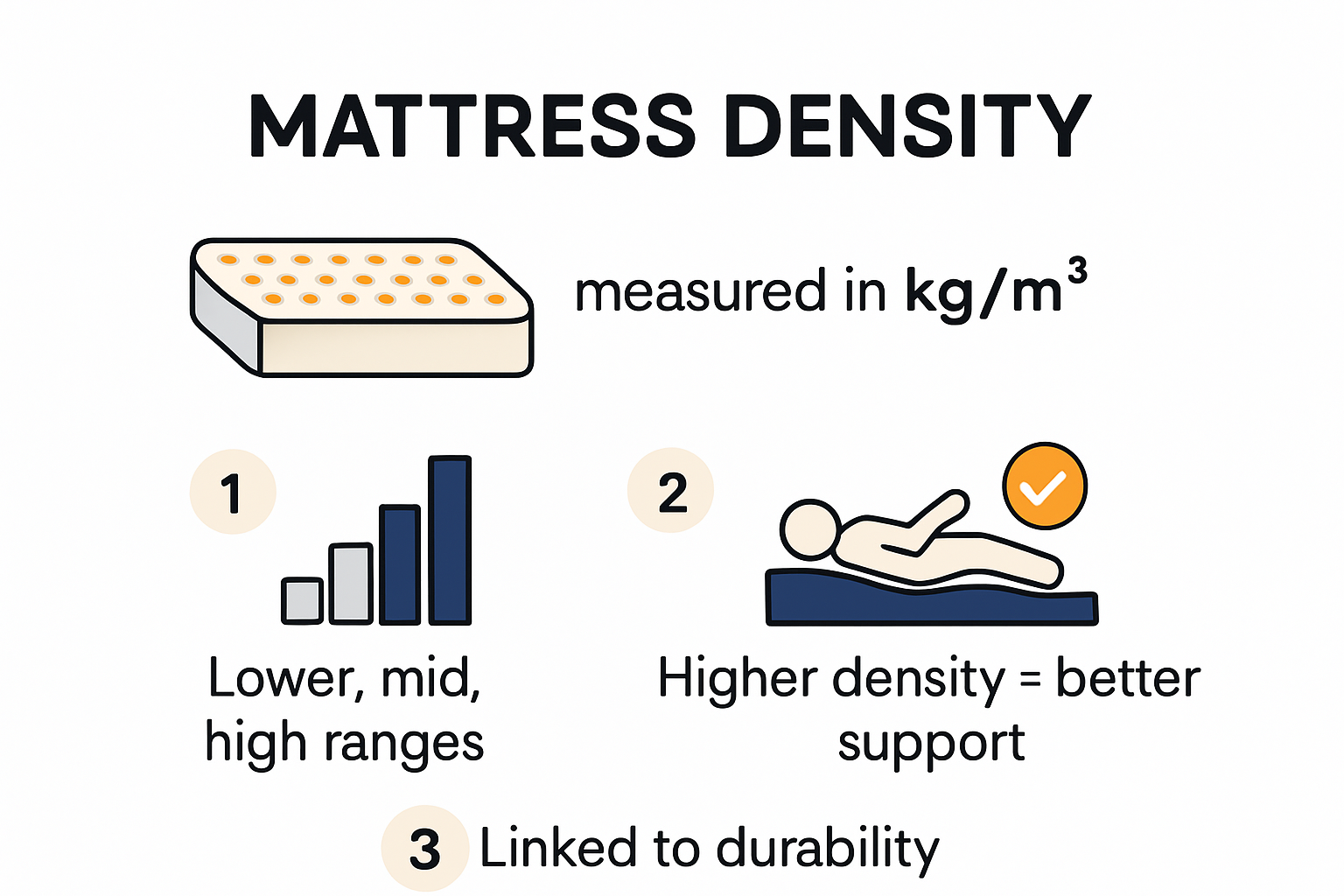
Density is not just a technical specification but a fundamental indicator of mattress quality. According to foam experts, mattress density is calculated by weighing one cubic metre of foam material. This measurement reveals how much material is packed into a specific volume, which translates directly into the mattress’s ability to provide consistent support and maintain its shape over time.
When discussing density, we typically measure it in kilograms per cubic metre (kg/m³). Lower density foams might weigh around 40-50 kg/m³, while high-density options can reach 80 kg/m³ or more. The weight indicates how tightly the foam materials are compressed, which significantly influences the mattress’s overall performance.
The density of a mattress plays a pivotal role in determining its comfort, support, and longevity. Research from foam specialists demonstrates that higher density foams offer several distinct advantages:
For instance, memory foam mattresses with densities above 5 lbs/ft³ (approximately 80 kg/m³) typically offer superior support and are more resistant to wear and tear. Conversely, lower density foams around 3 lbs/ft³ might feel softer initially but tend to deteriorate more quickly.
Choosing the right mattress density depends on several personal factors. Foam manufacturing experts recommend considering your body weight, preferred sleeping position, and individual comfort preferences. Heavier individuals might benefit from higher density mattresses that provide more robust support, while lighter sleepers could find medium-density options more comfortable.
Interestingly, mattress density isn’t just about firmness. It’s a nuanced characteristic that influences how the mattress responds to your body, distributes weight, and maintains its shape over time. For those seeking additional insights into selecting the perfect mattress, our comprehensive sleep guide offers detailed recommendations tailored to individual needs.
Understanding mattress density empowers you to make more informed purchasing decisions, ensuring you invest in a mattress that provides optimal comfort, support, and longevity for years to come.
Comfort and support are the cornerstone of a quality mattress, and mattress density plays a pivotal role in determining how well your bed meets these essential sleep requirements. Understanding the intricate relationship between density and sleep quality can help homeowners and families make more informed mattress selection decisions.
Sleep experts reveal that mattress density directly influences how well a mattress supports your body. Higher density materials provide more consistent and targeted support, effectively distributing body weight and maintaining proper spinal alignment. This means that a well-designed dense mattress can help reduce pressure points, minimise muscle tension, and promote better sleep posture.

The relationship between density and comfort is nuanced. Low-density foams might feel softer initially but often fail to provide long-term support. In contrast, high-density foams create a more responsive sleeping surface that adapts to your body’s contours while maintaining structural integrity. For families and individuals with specific support needs, this characteristic becomes crucial in preventing back pain and ensuring restful sleep.
Every sleeper is unique, and mattress density should reflect individual requirements. Orthopedic specialists recommend considering factors such as body weight, sleeping position, and personal comfort preferences when selecting mattress density.
Interestingly, sleep research suggests that mattress density impacts more than just physical comfort. It can influence sleep quality, recovery, and overall well-being. A mattress with appropriate density can help reduce nighttime movement, minimise partner disturbance, and promote deeper, more restorative sleep.
Density is not just about immediate comfort but also about long-term mattress performance. Higher density mattresses typically demonstrate superior durability, maintaining their supportive qualities for extended periods. This means fewer replacements and better value for homeowners looking to invest in quality sleep solutions.
For those seeking personalised advice on selecting the perfect mattress density, our comprehensive sleep guide offers tailored recommendations to help you make an informed decision.
Ultimately, understanding mattress density empowers you to choose a sleep surface that not only feels comfortable today but continues to provide exceptional support and comfort for years to come. By considering density as a key factor in mattress selection, you invest in better sleep, improved health, and enhanced overall well-being.
Selecting the appropriate mattress density is a critical decision for homeowners and property managers that extends far beyond personal comfort. The right density can significantly impact sleep quality, property value, and long-term investment in bedroom furnishings.
Sleep environment experts recommend tailoring mattress density to specific living situations. For primary residences, high-density mattresses (60 kg/m³ and above) provide the most robust solution, offering exceptional durability and consistent support for daily use.
Rental properties and guest rooms require a strategic approach to mattress selection. Medium-density mattresses around 40-50 kg/m³ strike an excellent balance between comfort, durability, and cost-effectiveness. These mattresses can withstand varied usage patterns while providing comfortable support for different body types and sleeping preferences.
Every household has unique requirements that influence mattress density selection. Sleep research suggests considering several key factors:
For landlords and property developers, our comprehensive mattress guide provides detailed insights into selecting the most appropriate mattress densities for different living spaces.
Choosing the right mattress density involves more than just numbers. Orthopedic specialists recommend a holistic approach that considers multiple factors:
Special considerations apply for specific scenarios. Families with growing children might opt for adaptable medium-density mattresses that can accommodate changing body sizes and weights. Rental property owners should prioritise mattresses that maintain their supportive qualities across multiple occupants.
Ultimately, mattress density is an investment in comfort, health, and property maintenance. By carefully selecting the right density, homeowners and property managers can ensure optimal sleep experiences while maximising the longevity and value of their mattress investments. The key is to approach mattress selection as a strategic decision that balances immediate comfort with long-term performance and durability.
People experiencing back and joint issues require more than just a comfortable mattress—they need a strategic sleep surface that provides targeted support, pressure relief, and proper spinal alignment. Understanding how mattress density impacts musculoskeletal health can transform your approach to selecting the right sleeping solution.
Orthopedic specialists emphasise that mattress density plays a crucial role in managing back and joint discomfort. Higher density mattresses offer more consistent support, helping distribute body weight evenly and reducing pressure on sensitive areas like the spine, hips, and shoulders.
Individuals with chronic back pain or joint issues benefit most from mattresses that feature zoned support systems. These innovative designs incorporate varying density levels across different body regions, providing firmer support under the lower back and hips while maintaining softer zones for shoulders and knees. This targeted approach helps maintain natural spinal curvature and minimises overnight strain.
Research in biomechanics recommends specific density guidelines for those managing musculoskeletal challenges:
For those seeking personalised sleep solutions, our comprehensive sleep position guide provides additional insights into matching mattress characteristics with individual physical needs.
Physiotherapy experts suggest a holistic approach to mattress selection that goes beyond simple density measurements. Key considerations include:
People with recurring back discomfort should prioritise mattresses that offer even weight distribution and minimal motion transfer. A well-designed high-density mattress can help reduce overnight pain, support natural healing processes, and improve overall sleep quality.
Ultimately, mattress density is not a one-size-fits-all solution for back and joint care. It requires a personalised approach that considers individual physical characteristics, pain management needs, and long-term comfort. By understanding the intricate relationship between mattress density and musculoskeletal health, you can make an informed decision that supports both your immediate comfort and long-term physical well-being.
Mattress density measures the weight of foam per cubic metre, indicating the level of support, comfort, and durability a mattress provides.
Higher density mattresses offer better support, enhance durability, and improve overall comfort, contributing to better sleep quality by maintaining spinal alignment and reducing pressure points.
Consider your body weight, preferred sleeping position, and personal comfort preferences. Lighter sleepers may prefer medium-density mattresses, while heavier individuals might benefit from high-density options for adequate support.
A medium-firm density ranging between 50-60 kg/m³ is often recommended, as it provides balanced support and pressure relief, particularly beneficial for individuals with back or joint issues.
Are you tired of waking up achy or feeling like your mattress just does not last? The article above showed that understanding mattress density is key for better support, longer-lasting comfort, and healthier sleep for everyone at home. If you need a mattress that truly fits your needs and keeps up with family life, you are not alone. The right density can make the difference between support that lasts and sagging that disrupts your rest.
Discover our wide range of Memory Foam Mattresses and Foam & Manmade Fibre Mattresses designed for optimal support, pressure relief, and durability tailored to your lifestyle and body type.

Upgrade your family’s sleep now by choosing a mattress with the density and comfort you have just read about. Explore our collection at Number One Beds and find your perfect match today. Do not wait and experience the difference a thoughtfully chosen mattress can make for your home and wellbeing.
