
Bed frames often fade into the background, yet their condition plays a huge role in daily comfort and long-term sleep quality. Here’s something most people miss. Regular bed frame inspections can actually extend its lifespan up to 10 years or more when done correctly. Surprisingly, expensive repairs are rarely needed if you catch warning signs early and use a cleaning routine suited to your frame’s material. Want your bed to look great while lasting longer? You are about to see how small changes make a big impact.
| Takeaway | Explanation |
|---|---|
| Regular Inspections are Crucial | Monitor your bed frame’s structural integrity every few months, checking for loose joints and unusual sounds to prevent major issues. |
| Tailored Cleaning Routines | Use specific cleaning methods suited to the material of your bed frame, such as soft cloths for wood and slightly damp cloths for metal, ensuring thorough drying. |
| Identify Replacement Needs Early | Watch for warning signs like persistent squeaking, visible cracks, or extensive rust, which indicate that replacement may be necessary for safety and comfort. |
Maintaining your bed frame requires understanding the unique characteristics of different materials. Each type of bed frame demands specific care to ensure longevity, preserve its aesthetic appeal, and protect your investment. Explore our comprehensive guide on bed frame materials to understand the nuanced maintenance strategies for various frame types.
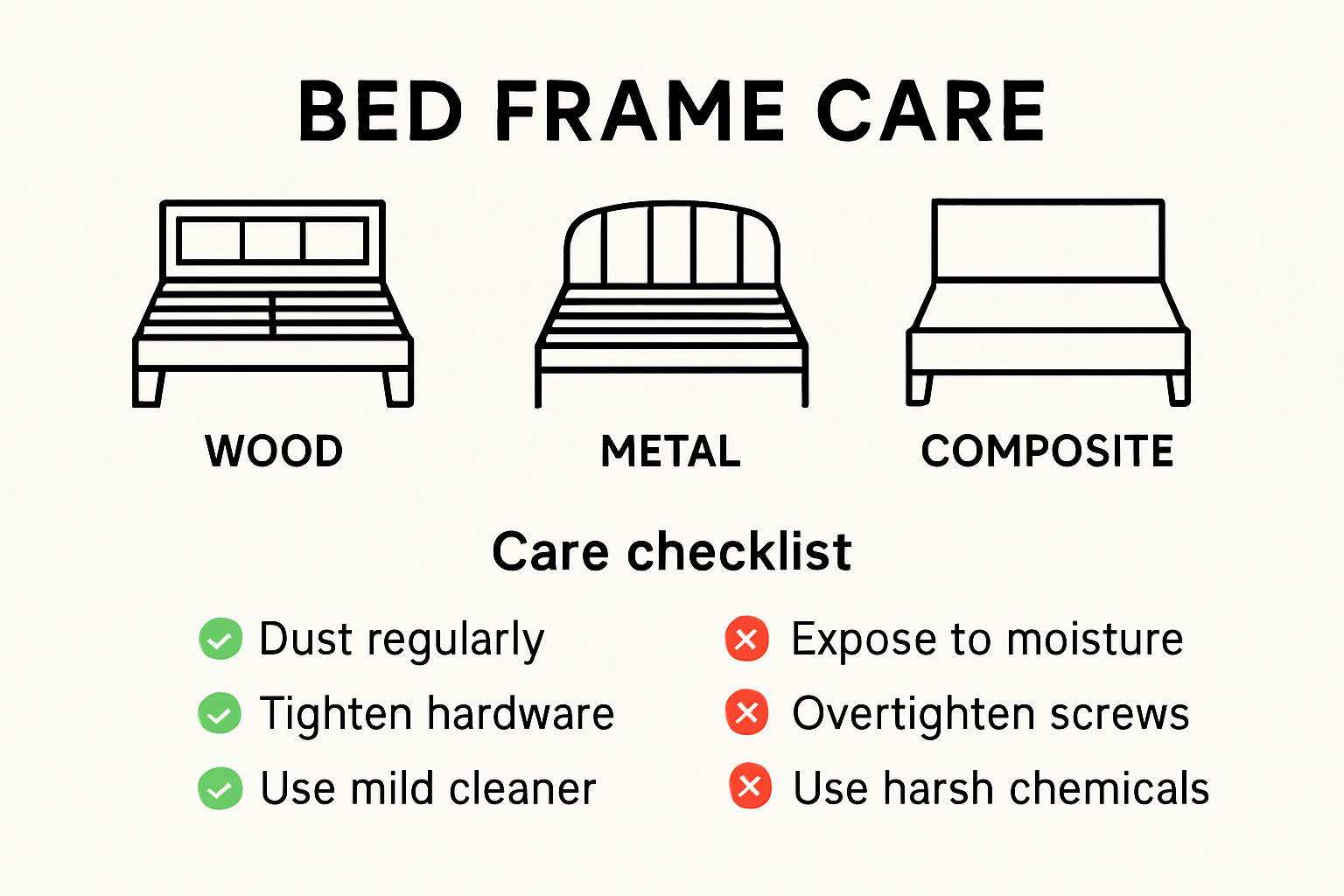
Wooden bed frames represent a timeless choice for bedroom furniture, offering warmth and natural beauty. These frames require careful attention to preserve their structural integrity and appearance. According to expert furniture maintenance guidelines, regular cleaning is crucial. Use a soft, slightly damp cloth to remove dust and debris, always following the wood grain. Immediately dry the surface with a lint-free cloth to prevent moisture absorption.
Specialised care depends on the wood finish. For oiled or waxed wooden frames, apply a gentle wood polish sparingly. Avoid multipurpose cleaners that might damage the wood’s natural protective layer. Place felt pads under the bed legs to prevent scratching hardwood floors and protect the frame’s base from unnecessary wear.
Metal bed frames demand a different approach to maintenance. These frames are typically more resilient but still require consistent care to prevent rust and maintain their structural integrity. Cleaning experts recommend using a dry or slightly damp cloth for regular cleaning, ensuring thorough drying to prevent moisture accumulation.
Rust prevention is critical for metal frames. Regularly inspect the frame for early signs of corrosion, particularly in humid environments. If you notice small rust spots, carefully remove them using a wire brush as recommended by the manufacturer. Consider applying a thin layer of rust-resistant paint or protective coating to vulnerable areas, especially if the bed is located in a room with high humidity.
Modern bed frames often combine multiple materials, presenting unique maintenance challenges. These hybrid designs might incorporate wood, metal, and even upholstered elements. The key is to identify each material’s specific care requirements and develop a comprehensive maintenance strategy.
For composite frames, use cleaning methods appropriate to the dominant material. Always check manufacturer instructions, as some mixed-material frames might have specific cleaning recommendations. Avoid using harsh chemicals that could damage the frame’s finish or weaken its structural components.
Understanding how to maintain different bed frame materials is more than a cleaning routine—it’s about preserving the comfort and aesthetic of your sleeping space. Each material tells a different story of care, durability, and design. By investing time in proper maintenance, you ensure your bed frame remains a reliable and beautiful centrepiece of your bedroom for years to come.
Bed frames are the foundation of a good night’s sleep, but they can develop issues that compromise their performance and longevity. Understanding how to identify and address these problems early can save you from costly replacements and ensure your bed remains a comfortable, reliable sanctuary. Learn more about choosing the right bed base to minimise potential structural problems.
The most critical aspect of bed frame maintenance is monitoring its structural integrity. According to furniture maintenance experts, loose connections are a primary source of bed frame problems. Regular inspections can prevent minor issues from escalating into major structural failures.
Check your bed frame’s joints and connections quarterly. Tighten any loose bolts or screws using appropriate tools. Listen for unusual sounds when moving or sitting on the bed these can indicate potential structural weaknesses. Pay special attention to corner joints and central support areas, as these bear the most weight and are most prone to wear.
Different bed frame materials exhibit unique deterioration patterns. For wooden frames, watch for signs of wood warping, cracking, or splitting. Moisture is the primary culprit. Cleaning experts recommend maintaining a consistent environment to prevent wood damage. Avoid placing the bed near heating vents or in areas with extreme humidity fluctuations.
Metal bed frames require vigilant rust prevention. Inspect the frame regularly, particularly in humid rooms. Small rust spots can be carefully removed with a wire brush, but extensive rusting might indicate the need for frame replacement. Ensure the frame is thoroughly dried after cleaning and consider applying a protective coating to vulnerable areas.
Proactive maintenance is your best defence against bed frame problems. Create a routine inspection checklist that includes checking for:

Rotate your mattress regularly and avoid placing excessive weight on one area of the bed. Use appropriate bed slats or support systems designed for your specific frame type. If you notice persistent issues, consult a professional or consider replacing the frame before it completely fails.
Remember, a well-maintained bed frame not only provides structural support but also contributes to your overall sleep quality. By dedicating time to regular inspections and addressing potential problems promptly, you can extend the life of your bed frame and ensure a comfortable, reliable sleeping environment for years to come.
A clean bed frame is more than just an aesthetic preference—it’s essential for maintaining a healthy sleeping environment. Dust, allergens, and bacteria can accumulate quickly, potentially impacting your sleep quality and overall health. Discover how to create a cosy and supportive sleep space that prioritises both cleanliness and comfort.
Each bed frame material requires a tailored approach to cleaning. According to mattress care experts, a consistent weekly maintenance routine is crucial for preserving your bed frame’s appearance and hygiene.
For wooden bed frames, use a soft microfibre cloth or feather duster to remove dust gently. Spot clean any stains with a mild wood cleaner, being careful not to oversaturate the surface. Always follow the wood grain and immediately dry any damp areas to prevent moisture damage. Avoid harsh chemical cleaners that can strip the wood’s natural finish or cause discoloration.
Metal bed frames demand a simpler approach. Furniture maintenance professionals recommend wiping down the frame with a dry or slightly damp cloth, ensuring thorough drying to prevent rust formation. For frames with intricate designs, use a soft brush to remove dust from hard-to-reach areas.
Upholstered bed frames require special attention. Cleaning experts advise against using vacuum cleaners, which can damage delicate fabrics. Instead, use a soft clothes brush or lint-free cloth to remove dust and surface dirt. Pay extra attention to the headboard, as it accumulates oils from skin and hair more quickly.
For fabric-covered frames, consider a gentle fabric cleaner specifically designed for upholstery. Test any cleaning solution on a small, inconspicuous area first to ensure it doesn’t cause discoloration or damage. Some fabric protector sprays can help repel dust and make future cleaning easier.
Beyond regular weekly cleaning, plan for a more thorough deep clean every few months. This involves:
Pay special attention to areas that collect dust or moisture. Check under the bed, around joints, and in any crevices where allergens might accumulate. For wooden frames, this is an excellent time to apply a protective polish or wax that helps maintain the wood’s integrity.
Remember, a clean bed frame contributes significantly to your overall sleep hygiene. By implementing these cleaning routines, you’re not just maintaining a piece of furniture—you’re creating a healthier, more comfortable sleeping environment. Consistent care ensures your bed frame remains a beautiful, hygienic centrepiece of your bedroom for years to come.
Deciding whether to repair or replace your bed frame is a critical decision that impacts your sleep quality, bedroom aesthetics, and long-term comfort. Understanding the signs of significant wear can help you make an informed choice about your bed’s future. Explore our comprehensive comparison of bed frame materials to better understand the lifespan and maintenance requirements of different frame types.
Structural damage represents the most critical indicator that your bed frame might need replacement. According to furniture maintenance experts, persistent issues can compromise your sleep environment and personal safety. Look for these definitive red flags:
These symptoms suggest that the frame’s fundamental structural integrity has been compromised. Minor repairs might temporarily mask the problem, but ultimately, replacement becomes the most responsible solution.
Different bed frame materials exhibit unique deterioration patterns. Furniture restoration professionals recommend evaluating your frame based on its specific material characteristics.
For wooden frames, look for signs of severe warping, multiple deep cracks, or areas where wood has begun to rot or disintegrate. Minor chips or surface blemishes can often be repaired, but extensive structural damage necessitates replacement. Pay particular attention to joints and support areas, as these are most susceptible to long-term wear.
Metal bed frames require careful rust assessment. Small rust spots can typically be treated, but extensive corrosion indicates that the frame’s protective coating has failed. If rust has penetrated multiple areas or compromised the frame’s structural strength, replacement becomes necessary.
Beyond structural concerns, several practical factors should influence your decision to repair or replace:
Remember that your bed frame is more than just furniture—it’s the foundation of your sleep environment. Prioritising safety, comfort, and structural integrity ensures you invest wisely in your nightly rest. When in doubt, consult a professional who can provide personalised advice tailored to your specific bed frame and sleeping needs.
Regular inspections should be conducted every few months to check for loose joints, unusual sounds, or any signs of wear and tear that could affect the frame’s structural integrity.
Use a soft, slightly damp cloth to gently remove dust and debris, following the wood grain. Immediately dry the surface with a lint-free cloth to avoid moisture damage.
Signs that indicate it may be time for a replacement include persistent squeaking, visible cracks in the wood, extensive rust on metal frames, or any loose joints that cannot be tightened.
Regularly inspect your metal bed frame for early signs of corrosion and clean it using a dry or slightly damp cloth. Applying a thin layer of rust-resistant paint or protective coating can also help prevent rust formation.
You have just learned how regular care and the right cleaning routines can keep your bed frame strong for years. But what if your current frame is already showing cracks, wobbling or just feels out of date? A well-cared-for bed frame is the secret to restful sleep and a welcoming bedroom. If your frame is past its prime or hard to maintain, upgrading can solve your sleep worries for good. Explore our curated collection of Beds made from sturdy woods, sleek metals and modern fabrics—all designed to be both beautiful and easy to look after.

Make today the day you invest in comfort and peace of mind. Upgrade your bedroom with a durable new frame or find practical essentials to support your sleep. Visit Number One Beds now and discover stylish, reliable options that make bed maintenance simple. Your best night’s sleep starts with a bed frame you can trust.
