Bunk beds are a clever way to save space and turn a shared room into something children actually look forward to. Yet here is the surprise. While bunk beds look inviting, they are the source of a staggering number of injuries every year, with children under six accounting for most of the serious accidents on top bunks. You might think buying any bed with a guardrail is enough, but there are strict British safety standards most families do not even realise exist. Here is what most parents miss when it comes to keeping children safe up high.
| Takeaway | Explanation |
|---|---|
| Children under six should not use the top bunk | Children below this age often lack the physical coordination and judgement necessary for safe navigation of elevated sleeping spaces, increasing the risk of accidents. |
| Ensure adherence to safety standards | Select a bunk bed that complies with the EN 747 safety standard, which includes guardrail protection, proper mattress fit, and structural integrity to minimise risks. |
| Regular maintenance is crucial | Implement a monthly inspection routine to check for structural integrity, guardrail stability, and overall condition of the bunk bed to prevent potential accidents. |
| Position the bed strategically | Place the bunk bed away from windows, heating elements, and potential hazards to create a safer sleeping environment and reduce risk factors. |
| Incorporate universal design principles | Choose designs that accommodate different abilities and needs, including ergonomic features and adaptability for changing family requirements, to enhance usability and safety. |
Bunk beds offer exciting sleeping arrangements for children and compact living spaces, but they also present unique safety challenges that parents and guardians must carefully navigate. Understanding and proactively addressing potential risks can prevent accidents and ensure a secure sleeping environment for young ones.
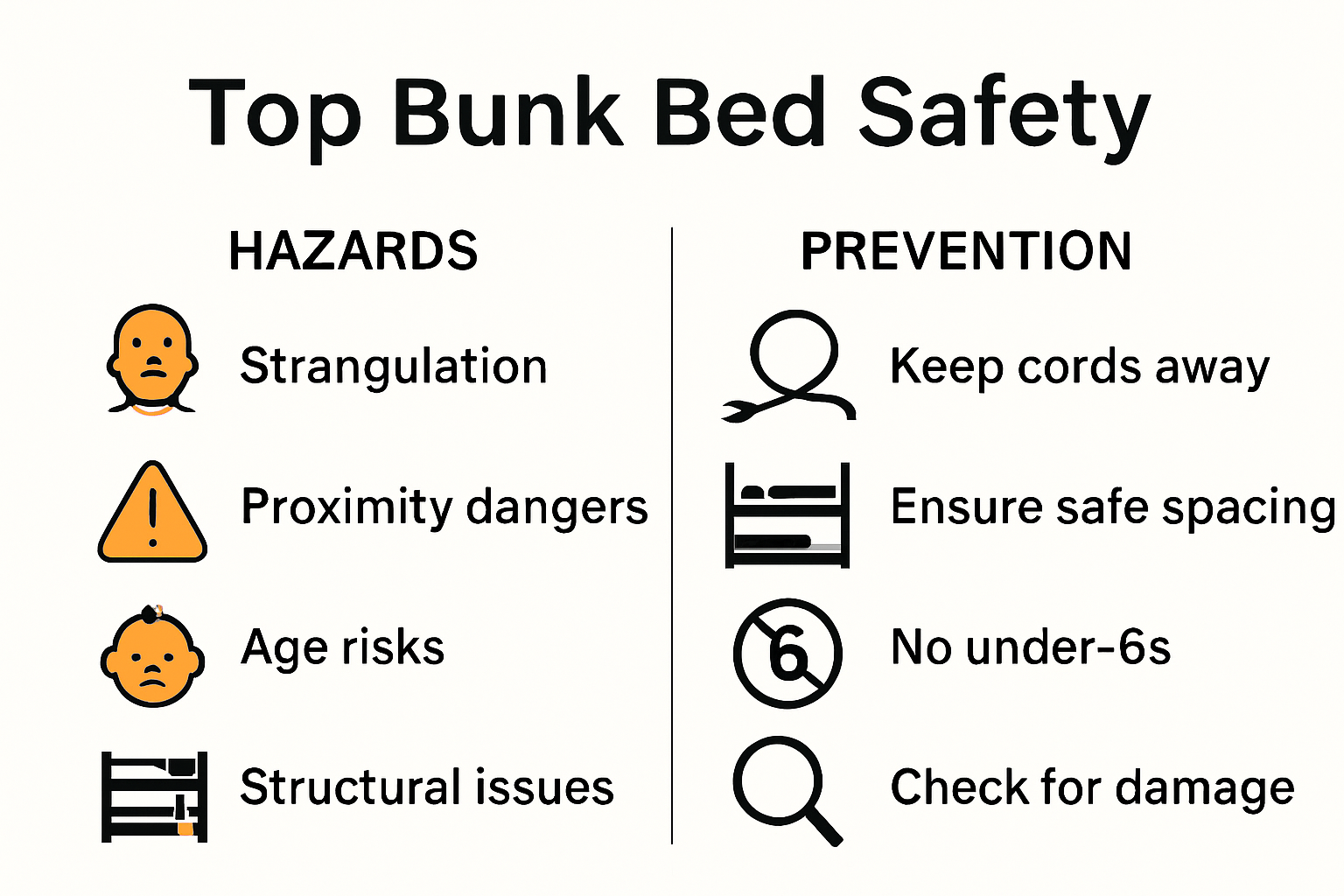
The most critical safety concern with bunk beds involves children’s age and developmental readiness. Research from child safety experts reveals that children under six years old should never sleep on the top bunk. Young children lack the physical coordination, spatial awareness, and judgement necessary to safely navigate elevated sleeping spaces. Parents must carefully assess their child’s maturity level, motor skills, and ability to follow safety instructions before permitting top bunk usage.
Additionally, children with certain developmental conditions or mobility challenges might require extra supervision or alternative sleeping arrangements. Understanding your child’s individual capabilities is paramount in preventing potential injuries.
Beyond age considerations, several physical hazards can compromise bunk bed safety. Safety guidelines from bedroom furniture experts highlight critical areas of concern that demand immediate attention:
Ensuring the structural integrity of the bunk bed and establishing clear usage rules are fundamental to maintaining safety. Regularly inspect guardrails, ladder connections, and overall bed frame stability. Guardrails should be sturdy, fully encompassing the top bunk, and extend at least 15 centimetres above the mattress surface to prevent accidental rolling.
Establish and consistently enforce household rules: no jumping, playing, or rough activities on the bunk bed. Teach children to use the ladder carefully, always facing towards it, and to move slowly and deliberately when ascending or descending.
For families considering bunk bed designs that align with safety standards, our guide on innovative bunk bed solutions offers comprehensive insights into creating secure and stylish sleeping spaces.
Remember, proactive prevention and ongoing supervision remain the most effective strategies in mitigating bunk bed risks. By understanding potential hazards and implementing robust safety measures, families can enjoy the practical benefits of bunk beds while ensuring their children’s well-being.
Selecting the right bunk bed involves more than aesthetic appeal. Safety, design, and practical considerations form the cornerstone of making an informed decision that protects your family while maximising bedroom functionality.
Selecting the right bunk bed involves more than aesthetic appeal. Safety, design, and practical considerations form the cornerstone of making an informed decision that protects your family while maximising bedroom functionality.
Furniture safety research highlights the critical importance of choosing a bunk bed that meets the EN 747 safety standard. This comprehensive regulation mandates specific requirements to ensure child safety. Key compliance elements include:
Child safety experts recommend that only children aged six and above should use the top bunk. When selecting a bunk bed, consider these crucial design elements:
Beyond safety, consider how the bunk bed integrates with your living space. Our comprehensive guide to innovative bedroom solutions explores how modern bunk beds can transform compact living areas.
Key considerations include:
Ultimately, choosing a bunk bed is about balancing safety, functionality, and comfort. Prioritise beds from reputable manufacturers who demonstrate a commitment to rigorous safety standards. Regular inspections, proper assembly, and ongoing maintenance will further enhance the bed’s safety profile.
Remember that no single design suits every family. Take time to research, compare options, and select a bunk bed that meets your specific safety requirements and lifestyle needs.
Successful bunk bed safety extends far beyond initial selection. Proper installation, consistent maintenance, and vigilant supervision form the cornerstone of creating a secure sleeping environment for children.
British safety standards specify precise requirements for bunk bed construction and installation. The BS EN 747-1:2024 standard mandates specific guidelines that every responsible parent and caregiver must understand. Critical installation considerations include:
Bed safety experts emphasise the importance of regular maintenance to prevent potential accidents. Implement a comprehensive monthly inspection routine that includes:
Safety assessments highlight critical environmental considerations that go beyond the bed itself. Proper room positioning can significantly reduce potential risks:
Our guide to smart bedroom solutions provides additional insights into creating safe and functional sleeping spaces.
Supervision remains the most critical safety measure. Establish clear rules for bunk bed usage: no jumping, playing, or rough activities. Young children should always be monitored when using the top bunk, and parents must remain vigilant about potential risks.
Remember that bunk bed safety is an ongoing commitment. Regular inspections, open communication with children about safety rules, and proactive maintenance can prevent most potential accidents. Each family’s approach will be unique, but the fundamental goal remains the same: creating a secure, comfortable sleeping environment that protects your child’s well-being.
Bunk bed design extends beyond aesthetic appeal, requiring careful consideration of accessibility, user needs, and adaptability across different life stages. Understanding how to create inclusive sleeping solutions ensures comfort, safety, and functionality for diverse family requirements.
British safety standards now emphasise universal design principles that accommodate users with varying abilities and ages. The latest EN 747 standard, published in 2024, provides comprehensive guidelines for domestic and non-domestic bunk bed configurations.
Key universal design considerations include:
Accessibility experts recommend focusing on ergonomic elements that enhance user experience. Consider these critical design aspects:
These features become increasingly important when accommodating users with different physical capabilities or developmental stages.
Families evolve, and so should sleeping arrangements. Our comprehensive design guide explores innovative approaches to creating flexible sleeping solutions that grow with your family.
Consider adaptable configurations such as:
Accessibility is not just about physical design but also about creating spaces that support individual comfort and developmental needs. This might mean selecting a bunk bed that can transition from a child’s sleeping area to a teenager’s personalised space or accommodating potential mobility changes.
Ultimately, the most successful bunk bed design balances safety, functionality, and flexibility. By prioritising universal design principles and maintaining adaptability, families can invest in sleeping solutions that provide long-term value and support evolving lifestyle requirements.
Remember that each family’s needs are unique. Take time to assess your specific requirements, consult design professionals if needed, and choose a bunk bed that represents a thoughtful investment in comfort and accessibility.
Children under six years old should not use the top bunk due to their lack of physical coordination and spatial awareness, which increases the risk of accidents.
Select a bunk bed that complies with EN 747 safety standards, which include proper guardrail protection and structural integrity. Regular maintenance and inspections are also crucial.
Common hazards include strangulation risks from hanging items, proximity dangers if the bed is too close to windows, and structural issues if the bed is not properly installed and maintained.
It is recommended to implement a monthly inspection routine to check for any loose parts, structural integrity, and guardrail stability to ensure ongoing safety.
Worried about bunk bed safety and the daily risks that keep you up at night? When it comes to your children’s wellbeing, compromise simply isn’t an option. At Number One Beds, we take your safety concerns seriously and offer a collection of kids’ beds that prioritise the security principles highlighted in the guide you have just read. From robust guardrails to reliable mattress fit, our products are carefully selected for families seeking both comfort and certified safety.
Every family deserves a restful night without second-guessing their child’s sleeping arrangements. Explore our range of sturdy bunk beds and discover options designed with British standards and real families in mind at Number One Beds. Ready to create a safer, happier bedroom? Visit our kids’ bed selection today and bring home confidence alongside quality.
