Everyone has a preferred sleep position, but few realise how much it affects their health and comfort. Here is something that might surprise you. One in six adults suffers from back pain linked to poor mattress choices. It sounds logical to pick the softest or the firmest mattress, but that classic advice could actually make your nights worse. The real key lies in tailoring your mattress to your specific sleep style, which most people never do.
| Takeaway | Explanation |
|---|---|
| Back Sleepers Need Medium-Firm Mattresses | Back sleepers ideally require medium-firm mattresses (6-8 on the firmness scale) for proper spinal alignment, with heavier individuals benefiting from firmer options (7-8). |
| Side Sleepers Should Opt for Softer Mattresses | Side sleepers need softer mattresses (4-6 on the firmness scale) to alleviate pressure on shoulders and hips, with materials that allow strategic sinkage for comfort. |
| Stomach Sleepers Require Firm Support | Stomach sleepers benefit from firm mattresses (7-9) to prevent excessive sinking of the pelvis and maintain proper spinal alignment, ideally through innerspring or hybrid mattresses. |
| Motion Isolation is Important in Shared Spaces | For families and couples, mattresses with good motion isolation such as hybrid or memory foam can minimise sleep disruptions, making them ideal for shared sleeping environments. |
| Durability Matters for Family Investments | Selecting durable mattresses made from high-quality materials like natural latex or resilient memory foam is crucial for families to ensure long-term comfort and investment. |
Your sleep position dramatically influences the type of mattress support you need. Each sleeping style demands unique comfort and structural characteristics to ensure proper spinal alignment, pressure relief, and overall sleep quality.
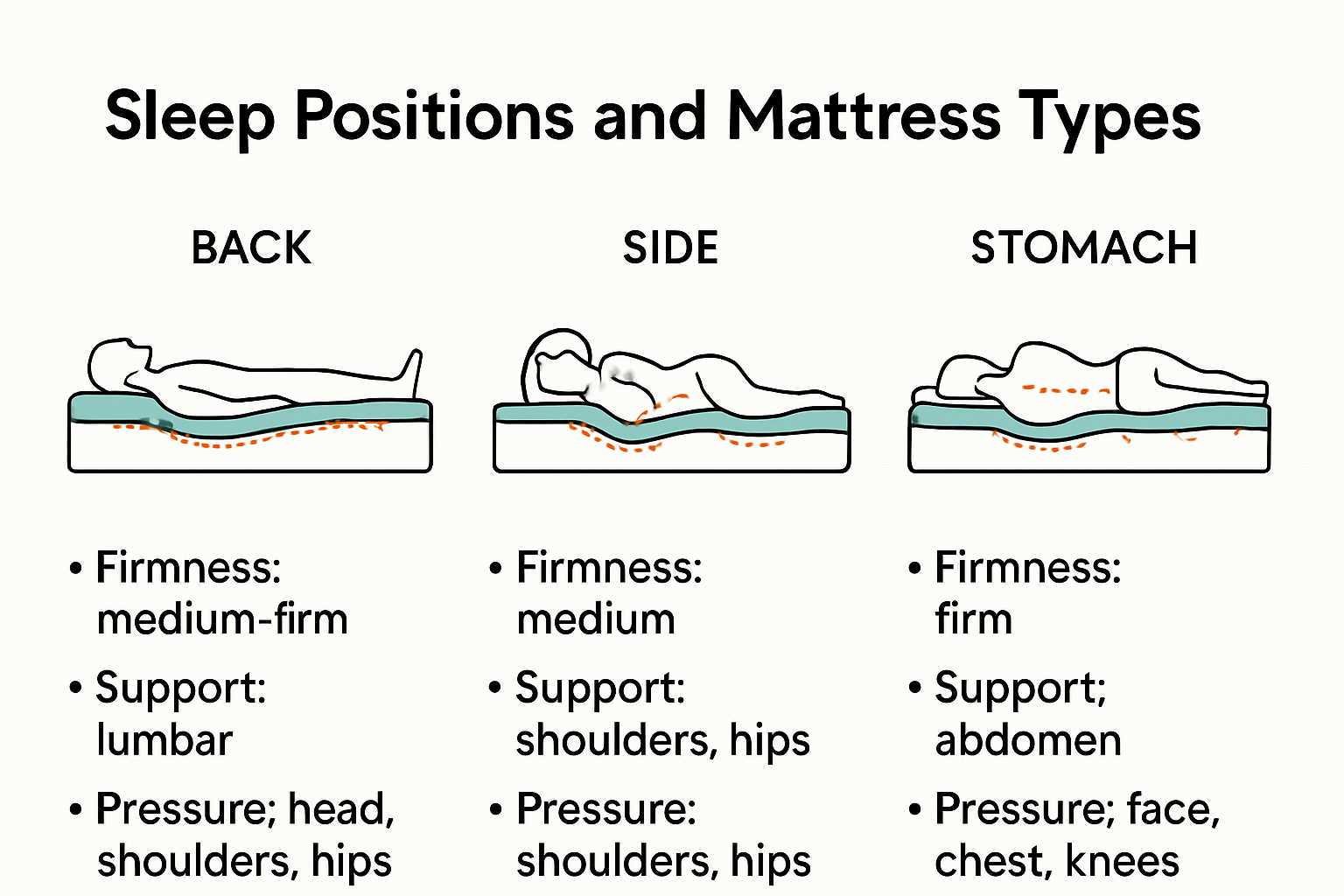
Back sleepers require a delicate balance of support and comfort to maintain natural spinal curvature. Our comprehensive guide to mattress selection reveals that medium-firm mattresses (with a firmness rating between 6-8) work best for this sleeping position. According to research from Tom’s Guide, heavier individuals weighing over 230 pounds benefit from firmer options around 7-8 on the firmness scale, while lighter sleepers under 130 pounds might prefer a slightly softer surface around 6-6.5.
The ideal mattress for back sleepers should provide robust lumbar support, preventing the lower back from sinking too deeply and maintaining proper alignment. Memory foam and hybrid mattresses often excel in this category, offering responsive contouring that adapts to the body’s natural curves while providing targeted support where it matters most.
Side sleeping introduces unique challenges for mattress selection. This position creates concentrated pressure on the shoulders, hips, and knees, necessitating a mattress that can effectively distribute weight and cushion these critical areas. Softer mattresses with enhanced pressure relief become crucial, typically ranging between 4-6 on the firmness scale.
The right mattress for side sleepers should feature materials that allow strategic sinkage, particularly around the shoulders and hips. Memory foam and latex mattresses often provide exceptional performance, creating a gentle cradle that prevents uncomfortable pressure buildup. These materials help maintain proper spinal alignment while offering the necessary give to accommodate the body’s natural curves.
Sonno’s mattress firmness guide emphasises that stomach sleepers require firm mattresses to prevent excessive spinal curvature. This sleeping position demands consistent support to keep the spine as straight as possible, reducing the risk of lower back strain.
Firm mattresses between 7-9 on the firmness scale work best for stomach sleepers, preventing the pelvis from sinking too deeply and maintaining proper spinal alignment. Innerspring and hybrid mattresses with robust support cores often provide the necessary stability. The goal is to create a sleep surface that remains consistently level, preventing uncomfortable sinking that could lead to potential back pain.
Understanding your unique sleep position is the first step towards selecting a mattress that will transform your sleep experience. By matching your sleeping style with the appropriate mattress support, you can ensure better comfort, reduced pain, and more restful nights.
Selecting the right mattress type is crucial for optimal sleep comfort and support. Different sleeping styles require specific mattress characteristics to ensure proper alignment, pressure relief, and restorative rest.
Our expert mattress guide highlights memory foam as a versatile option for multiple sleep positions. This material excels at contouring to the body’s unique shape, providing personalised support and pressure relief. According to Sleep Hero research, memory foam works exceptionally well for side sleepers, offering critical cushioning for shoulders and hips while maintaining spinal alignment.
For back sleepers, medium-density memory foam provides excellent lumbar support, distributing body weight evenly and reducing pressure points. Stomach sleepers can benefit from firmer memory foam variants that prevent excessive sinking and maintain a stable sleeping surface. Modern memory foam technologies have addressed previous concerns about heat retention, with cooling gel infusions and breathable designs ensuring a comfortable sleep temperature.
Hybrid mattresses combine the best features of innerspring and foam technologies, making them an excellent choice for individuals with varying sleep preferences. The pocketed coil system provides robust support and excellent air circulation, while the foam layers offer targeted pressure relief and comfort. These mattresses particularly suit combination sleepers who frequently change positions during the night.
The responsive nature of hybrid mattresses allows for easier movement compared to traditional memory foam, reducing the feeling of being trapped in the mattress. For back and stomach sleepers, the firmer coil base prevents excessive sinking, while the top foam layers provide necessary cushioning. Side sleepers can benefit from the softer top layers that accommodate the body’s natural curves and reduce pressure on joints.
Latex mattresses offer a unique sleep experience, particularly for those seeking a more natural and responsive mattress option. Derived from rubber tree sap, natural latex provides exceptional durability and consistent support across different sleep positions. The material offers a balanced feel between the contouring of memory foam and the responsiveness of innerspring mattresses.
For side sleepers, latex mattresses provide gentle cushioning that helps distribute body weight evenly, reducing pressure on shoulders and hips. Back sleepers benefit from the material’s ability to maintain a neutral spine alignment, while stomach sleepers appreciate the firmer support that prevents excessive hip sinking. Additionally, latex mattresses are naturally hypoallergenic and resistant to dust mites, making them an excellent choice for individuals with allergies or respiratory sensitivities.
Choosing the right mattress type involves understanding your unique sleep style, body composition, and comfort preferences. By carefully considering these factors, you can select a mattress that not only supports your sleeping position but also enhances overall sleep quality and well-being.
Selecting the right mattress for families and shared spaces requires careful consideration of multiple factors beyond individual comfort. The mattress becomes a critical investment that impacts everyone’s sleep quality, health, and daily performance.
Our comprehensive family bed selection guide emphasises the importance of motion isolation in shared sleeping spaces. According to independent testing by Which? magazine, motion isolation can significantly reduce sleep disruptions for partners with different sleep schedules or movements.
Hybrid and memory foam mattresses excel in this category, minimising the transfer of movement across the bed. This becomes crucial for couples with different work schedules, parents with young children, or individuals who share beds with restless sleepers. High-quality memory foam layers can absorb movement, ensuring that one person’s tossing and turning does not disturb their partner’s sleep.
Families and shared spaces often involve individuals with diverse body types, weights, and sleeping positions. A mattress that accommodates these variations becomes essential. Some advanced mattress designs now offer zoned support systems, providing different firmness levels across various body regions.
For couples with significantly different body weights or sleep preferences, split mattresses or adjustable mattresses offer personalised comfort. These innovative solutions allow each side of the bed to have independent firmness settings, ensuring that both partners can enjoy optimal support and comfort. Child sleep specialists also recommend considering mattress firmness carefully, especially when selecting beds for growing children, emphasising the need for supportive yet comfortable sleep surfaces.
In family settings, a mattress represents more than just a sleeping surface—it is a long-term investment in health and well-being. Durability becomes a critical factor, particularly for households with children, pets, or frequent use. High-quality materials like natural latex and resilient memory foam can withstand years of consistent use while maintaining their structural integrity.
Consider mattresses with removable, washable covers that can handle spills, accidents, and regular cleaning. Hypoallergenic materials become increasingly important for families with allergy sufferers or young children. Additionally, mattresses with robust edge support can provide extra sleeping space and prevent premature sagging, extending the mattress’s usable lifespan.
Choosing the right mattress for families and shared spaces is about balancing individual needs with collective comfort. By prioritising motion isolation, adaptive support, and long-term durability, families can invest in a sleep solution that promotes restful nights and supports overall well-being. Remember that the perfect mattress is not about finding a one-size-fits-all solution, but about creating a flexible, responsive sleep environment that adapts to changing family dynamics.
Maintaining proper spinal alignment and joint health during sleep is crucial for overall physical well-being. With nearly one in six adults experiencing back pain, selecting the right mattress becomes a critical health decision that extends far beyond simple comfort.
Our comprehensive mattress selection guide highlights the critical relationship between mattress firmness and back support. According to osteopath Dave Gibson, maintaining spine alignment is paramount to preventing chronic pain. For individuals with back issues, medium-firm mattresses typically provide the optimal balance between support and comfort.
The key is finding a mattress that prevents the spine from settling into an unnatural U-shape during sleep. This means selecting a surface that offers responsive support, allowing heavier body parts to sink slightly while maintaining proper alignment for lighter regions. Memory foam and hybrid mattresses with zoned support systems excel in this regard, providing targeted support where the body needs it most.
Joint comfort requires more than just a firm surface. Mobility experts recommend considering adjustable bed bases that allow strategic positioning to alleviate joint stress. By elevating the upper or lower body, individuals can reduce pressure on specific joints and enhance overall sleep comfort.
For those with arthritis or chronic joint pain, mattresses with adaptive materials become crucial. Latex and memory foam options with responsive contouring can distribute body weight evenly, reducing concentrated pressure on sensitive areas. The goal is to create a sleep environment that supports natural body curves while minimising stress on problematic joints.
Beyond basic support, modern mattresses offer advanced features specifically designed for individuals with back and joint concerns. Look for mattresses with multiple support layers, incorporating technologies like pressure-relieving foam, cooling gel infusions, and ergonomic design principles.
Hybrid mattresses combining pocket springs with responsive foam layers can provide dynamic support that adapts to body movements. Some advanced models feature customisable firmness zones, allowing different support levels for shoulders, hips, and lower back. This targeted approach ensures that each body region receives appropriate support, reducing the likelihood of pain and discomfort.
Choosing the right mattress is a personalised journey that requires understanding your unique physical needs. While general guidelines provide a starting point, individual body composition, existing health conditions, and personal comfort preferences play significant roles. Consulting with healthcare professionals and conducting thorough in-store or online trials can help identify the most suitable mattress for optimal back and joint comfort.
Back sleepers generally benefit from medium-firm mattresses, ideally rated between 6-8 on the firmness scale, to support their spinal alignment without causing excessive sinking.
Yes, side sleepers should opt for softer mattresses, typically ranging from 4-6 on the firmness scale, to effectively relieve pressure on the shoulders and hips while maintaining proper spinal alignment.
Stomach sleepers require firm mattresses rated between 7-9 on the firmness scale to prevent excessive sinking and maintain proper spinal alignment. Innerspring or hybrid mattresses are ideal options.
For shared beds, look for mattresses with good motion isolation, such as hybrid or memory foam types, to minimise sleep disruptions caused by a partner’s movements. Consider durability and adaptability to support different body types.
If you have been struggling to find a mattress that matches your favourite sleep position, you are not alone. Many people experience back pain or restless nights because their mattress does not truly support how they sleep. Whether you are a side sleeper needing pressure relief, a back sleeper requiring balanced support, or a stomach sleeper seeking a firmer base, it is time to experience real comfort that fits your body and lifestyle. See our tailored Memory Foam Mattresses to explore options specifically designed for healthy spinal alignment and all-night relief.
Why not turn your newly gained mattress knowledge into action today? Visit Number One Beds for a wide selection of expertly crafted mattresses, beds, and bedroom essentials. Find your match, upgrade your sleep, and start each day feeling refreshed. Take the first step towards better nights and brighter mornings now.
