The significance of choosing the right mattress size extends beyond mere aesthetics; it can dramatically influence your sleep quality. Shockingly, research indicates that couples who switch to a larger bed, such as a King size, can gain nearly an hour more sleep per week. Yet many people still opt for smaller sizes, unaware of the impact this decision has on their well-being. The truth is, investing in the right mattress size does not just enhance comfort but can also transform your health, leading to deeper, more restorative sleep. Discover why the size of your mattress is not just a choice but a crucial factor in achieving optimal rest and health.
| Takeaway | Explanation |
|---|---|
| Mattress size directly impacts sleep quality | An appropriately sized mattress allows for comfortable movement and proper body alignment, which leads to deeper, restorative sleep. Couples particularly benefit from larger sizes, such as King, reducing disturbances and increasing sleep duration. |
| Selecting the right size enhances health and comfort | Adequate sleeping space supports physical health by promoting proper posture and minimizing strain on joints, while also reducing potential disruptions and enhancing overall sleep quality. |
| Space efficiency is crucial in small bedrooms | Understanding alternative mattress sizes, like small doubles, while utilising multifunctional furniture can maximise limited space without compromising sleep quality or comfort. |
| Consider individual needs when choosing size | Assess personal factors such as height, body type, and sleeping position to determine the ideal mattress size, ensuring optimal comfort and support throughout the night. |
| Practical considerations matter | Measure your bedroom accurately and consider access points to ensure the chosen mattress fits well, allowing for easy movement and a functional layout without sacrifices. |
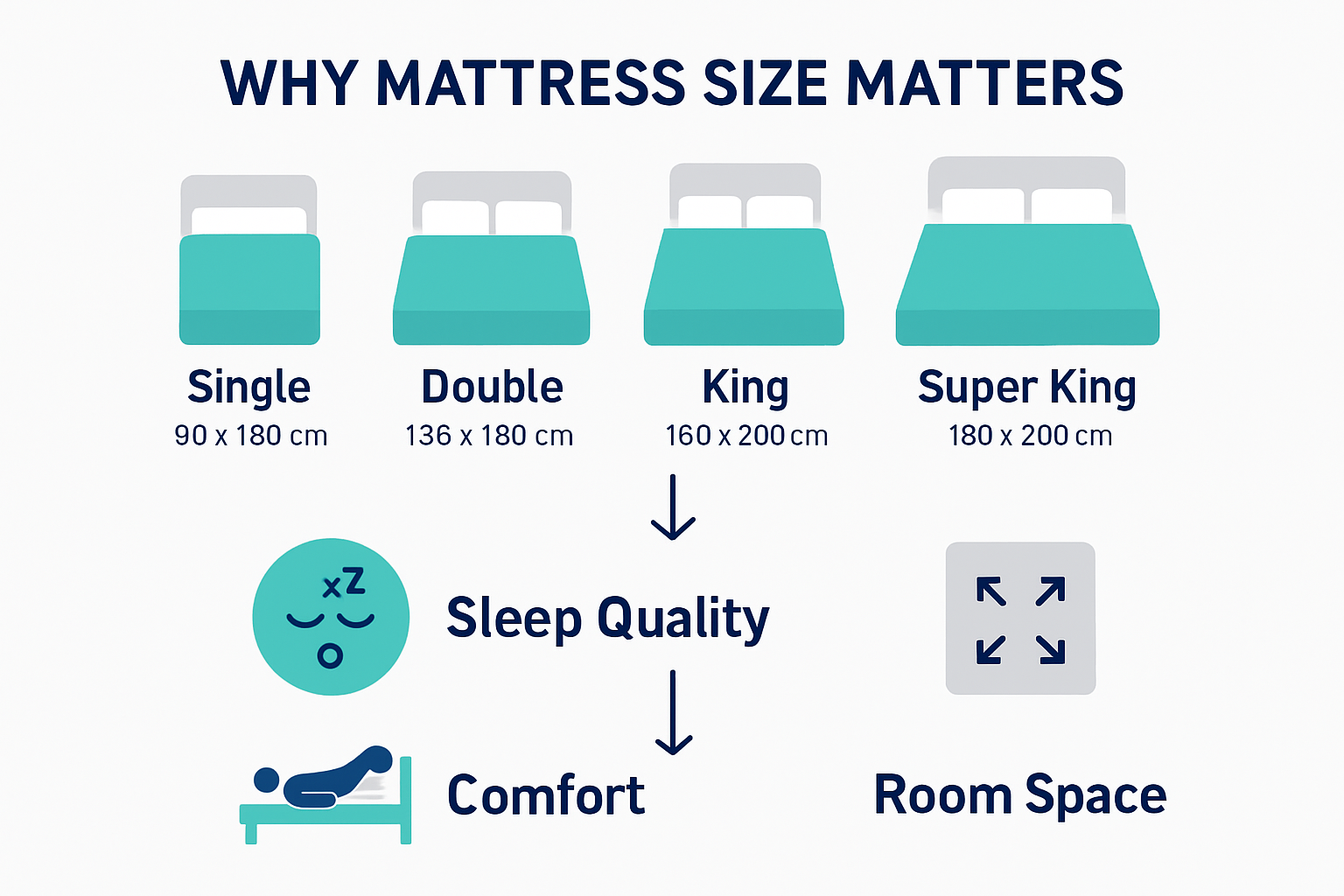
Finding the perfect mattress size is more than just a matter of fitting your bedroom—it’s about creating an environment that promotes quality sleep. When you understand why mattress size matters, you’re taking a significant step toward improving your overall wellbeing through better rest.
Your mattress dimensions directly influence how well you sleep. Too small, and you’ll find yourself constantly adjusting, turning, and potentially waking throughout the night. This disrupted sleep pattern prevents you from reaching the deeper, restorative sleep stages your body needs.
Interestingly, research from the National Bed Federation reveals that 50% of couples would buy a larger bed after trying one, with couples who upgrade to King size mattresses gaining almost an hour more sleep per week. This isn’t surprising when you consider the space requirements for comfortable sleep. Each sleeper ideally needs enough room to change positions naturally without disturbing their partner.
King size mattresses have now overtaken double beds as the most popular bed size in the UK, according to industry data. This shift reflects growing awareness of how mattress size affects sleep quality, particularly for couples sharing a bed who experience fewer disturbances with more space.
The right mattress size ensures proper body alignment throughout the night. When you have adequate space, your body can maintain its natural position without contorting to fit the available area. This proper alignment is crucial for preventing morning aches and supporting joint health.
For taller individuals, mattress length becomes particularly important. Standard UK doubles (135cm x 190cm) may leave taller sleepers with their feet hanging off the edge or forcing them to curl up uncomfortably. King size (150cm x 200cm) or Super King (180cm x 200cm) options provide the extra length needed for full-body support.
Weight distribution also improves on a properly sized mattress. Your body pressure gets evenly distributed across the surface rather than concentrated in a cramped area, reducing pressure points and improving blood circulation while you sleep.
The psychological aspect of having enough space shouldn’t be underestimated. Many people report feeling more relaxed and less confined when they have sufficient sleeping space. This mental comfort translates to falling asleep faster and experiencing more restful sleep throughout the night.
For couples, personal space within a shared bed creates a healthy balance between intimacy and independence. Each person can feel comfortable without feeling crowded, leading to fewer sleep disturbances from partner movement.
The feeling of spaciousness also contributes to stress reduction at bedtime. Rather than feeling constrained, you can stretch out fully, letting your body and mind relax completely. This mental freedom creates ideal conditions for sleep onset.
Recent research suggests that selecting the appropriate mattress isn’t just about size but also about firmness suited to your specific body measurements. A 2024 study indicates that using simple anthropometric measurements could make selecting the most appropriate mattress firmness easier for consumers, potentially improving sleep quality further.
When considering why mattress size matters, remember that sleep quality affects every aspect of your waking life—from cognitive function to emotional wellbeing. The investment in proper sizing pays dividends in improved sleep efficiency, ensuring you wake refreshed and ready for the day ahead. The perfect fit for restful sleep isn’t a luxury—it’s a necessity for optimal health and wellbeing.
When considering why mattress size matters, bedroom space efficiency becomes a crucial factor, especially in the UK where living spaces are often compact. The right mattress size can transform your bedroom from cramped to comfortable without sacrificing sleep quality or room functionality.
Choosing the appropriate mattress size is perhaps the most impactful decision you’ll make for bedroom space efficiency. While king-sized options offer luxurious sleeping space, they’re not always practical for smaller rooms. This is where understanding alternative sizing options becomes valuable.
Small double mattresses, measuring between 120-135 cm wide, have gained popularity as they strike an excellent balance between space efficiency and comfort. These mattresses provide sufficient sleeping area for individuals while freeing up valuable floor space in the bedroom. According to trend analysis, these space-saving options are increasingly being adopted for guest rooms and smaller living spaces where versatility matters.
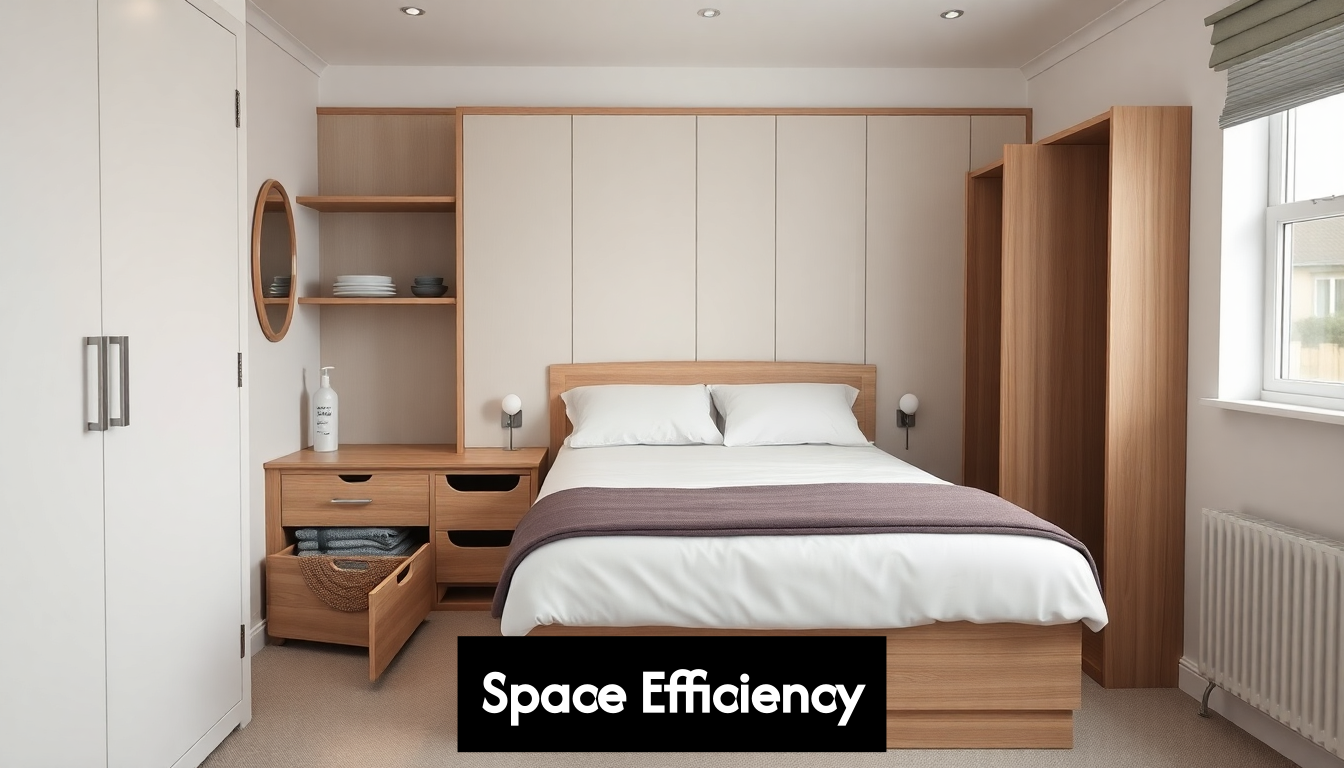
For extremely tight spaces, the UK mattress industry offers small single mattresses measuring 75 x 190 cm. These are ideal for children’s rooms, studio flats, and rooms that need to serve multiple purposes. Despite their compact dimensions, these mattresses are manufactured to the same comfort standards as their larger counterparts, ensuring sleep quality isn’t compromised.
When working with limited dimensions, every centimetre counts. Measuring your available space accurately before purchasing allows you to maximize your room’s potential while ensuring comfortable circulation space around the bed.
The bed frame you pair with your mattress can dramatically impact space efficiency. Traditional bed frames often waste valuable space underneath, but modern designs address this limitation effectively.
Ottoman beds represent one of the most practical space-saving innovations in modern bedroom furniture. These beds feature hydraulic mechanisms that allow the mattress to be lifted, revealing generous storage space underneath. According to furniture experts, ottoman beds provide convenient storage solutions without requiring additional space, making them excellent options for bedrooms with restricted dimensions.
Divan beds with built-in drawers offer another practical solution. Unlike ottoman beds that lift upward, divan bases feature pull-out drawers that provide easy access to stored items without needing to lift the mattress. This storage option works particularly well when paired with small double or double mattresses, creating a balanced approach to sleep comfort and space utilization.
For truly challenging spaces, consider wall beds (Murphy beds) that fold vertically when not in use. These can be paired with appropriately sized mattresses to create dual-purpose rooms that function as both sleeping areas and living spaces. This approach is particularly valuable in studio flats or open-plan designs.
Space efficiency extends beyond just the bed itself—it encompasses the entire room layout. The mattress size you select directly influences how you can arrange the rest of your bedroom furniture and impacts traffic flow through the space.
When working with limited dimensions, position your bed thoughtfully. In rectangular rooms, placing the headboard against the shorter wall often creates better flow around the bed. This arrangement typically allows for more functional space alongside the bed for wardrobes or dressers.
Furniture scale should complement your mattress size. Oversized bedside tables paired with a small mattress create visual imbalance and waste space. Instead, opt for slim nightstands, wall-mounted shelves, or hanging pendant lights that eliminate the need for table lamps altogether.
Vertical storage solutions make excellent companions to space-efficient mattress choices. Tall, narrow wardrobes, over-bed shelving, and wall hooks maximize storage while minimizing floor space requirements. This approach creates a cohesive design that feels spacious despite compact dimensions.
Understanding why mattress size matters in space planning allows you to make informed decisions that enhance both functionality and comfort. With carefully selected dimensions and complementary furniture, even the smallest bedroom can feel generously proportioned and serve its primary purpose effectively: providing a restful retreat at the end of the day.
When discussing why mattress size matters, the direct effects on physical health and overall comfort deserve careful consideration. The dimensions of your sleep surface influence far more than just how spacious your bed feels—they directly impact your physical wellbeing, comfort levels, and long-term health outcomes.
Your body undergoes critical restorative processes during sleep that require proper positioning and freedom of movement. A mattress that’s too small restricts natural movement and can force your body into unnatural positions throughout the night. This constraint may lead to poor spinal alignment, increased muscle tension, and compromised circulation.
Adequate sleeping space allows your body to maintain proper alignment without restriction. This is particularly important for individuals with existing joint or back problems, as constrained sleeping positions can exacerbate these conditions. With sufficient space, your spine, shoulders, and hips can rest in their natural positions, promoting healing and preventing further strain.
The health implications extend beyond just comfort. An ergonomic pilot study conducted by the National Bed Federation in the UK found that 50% of participants preferred a larger bed after trialling one, compared to just 15% before the trial. Participants cited less disturbance and improved comfort when sharing a bed—both factors that significantly impact sleep quality and, consequently, long-term health outcomes.
For those with specific health concerns such as pressure sores or circulation issues, mattress size becomes even more critical. A comprehensive review of Cochrane systematic reviews from the University of Manchester confirmed that mattress type and size are influential factors in preventing and treating pressure ulcers, emphasising that the right sleep surface can have direct implications for physical health, especially in vulnerable populations.
The quality of your sleep directly influences every aspect of your physical and mental health. When your mattress size is inadequate, sleep disturbances become more common, leading to fragmented rest patterns and reduced overall sleep quality.
For couples sharing a bed, mattress size plays a particularly significant role in sleep quality. When two people share a standard double mattress (135 x 190 cm), each person effectively has less width than a standard single bed provides to an individual sleeper. This spatial constraint leads to increased movement transfer between partners, resulting in more frequent sleep disruptions.
Movement transfer occurs when one person’s movements create vibrations that travel through the mattress, disturbing their partner. Larger mattresses—king (150 x 200 cm) or super king (180 x 200 cm)—provide more isolation between sleepers, reducing these disturbances significantly. This improved isolation allows each person to cycle through sleep stages naturally without interruption, leading to more restorative rest.
Temperature regulation, another crucial factor in sleep quality, also improves with adequate mattress space. When sleepers have sufficient room, body heat disperses more effectively, preventing overheating that commonly leads to sleep disruptions. This temperature benefit is particularly valuable for those who naturally sleep hot or during warmer months.
The psychological aspects of mattress size often receive less attention than physical factors, yet they profoundly influence overall wellbeing. The sensation of spaciousness or constraint in your sleep environment directly affects stress levels and perceived comfort.
Many people report feeling psychological discomfort when sleeping in confined spaces. This discomfort manifests as heightened alertness, difficulty relaxing, and increased stress before sleep onset. The feeling of being restricted can trigger mild claustrophobic responses even in those who don’t typically experience claustrophobia in other contexts.
In contrast, adequate mattress space creates a sense of freedom and relaxation. This psychological comfort allows the mind to unwind more effectively, facilitating faster sleep onset and deeper sleep throughout the night. The subconscious awareness of having room to move without restriction promotes a state of mental ease that enhances overall sleep quality.
For those managing anxiety or stress-related conditions, mattress size becomes an even more important consideration. The perception of spaciousness in the sleep environment can help counteract feelings of tension or confinement that often accompany anxiety. This psychological benefit translates to measurable improvements in sleep quality and mental wellbeing over time.
Understanding why mattress size matters reveals its profound impact on both physical and psychological health. When selected thoughtfully with individual needs in mind, the right mattress dimensions contribute significantly to overall wellbeing, making size a crucial factor rather than merely a question of bedroom aesthetics or available space.
Selecting the perfect mattress size is a decision that balances personal needs, sleeping habits, available space, and long-term comfort considerations. Understanding why mattress size matters helps you make an informed choice that will impact your sleep quality for years to come. Let’s explore the practical aspects of selecting the ideal mattress dimensions for your specific circumstances.
The most important consideration when choosing a mattress size is your unique personal requirements. Height, body type, sleeping position, and movement patterns all influence which mattress dimensions will provide optimal comfort and support.
Taller individuals generally need mattresses with greater length. While the standard UK mattress length is 190cm, taller sleepers should consider king or super king options that provide 200cm in length. This extra 10cm can make a significant difference in comfort, preventing feet from hanging over the edge and allowing for full-body support.
Your sleeping position also impacts size requirements. Side sleepers typically need more width as their shoulders and hips extend laterally. Back and stomach sleepers may require less width but benefit from having space to adjust positions throughout the night without feeling constrained.
Research indicates that mattress size should closely match the user’s body dimensions and sleep habits. Studies have shown that inappropriate sizing can negatively affect sleep quality, spinal alignment, and overall comfort, especially for couples or individuals who change positions frequently during sleep.
For those with specific health concerns, mattress size takes on additional importance. Conditions affecting mobility, such as arthritis or back pain, often require extra space to accommodate comfortable positioning and prevent strain during movement.
The UK mattress market follows specific size standards that differ somewhat from those in other countries. Familiarizing yourself with these standards helps you make accurate comparisons when shopping.
Standard UK adult mattress sizes range from 75 x 190cm for a small single to 180 x 200cm for a super king. Selecting the right size ensures users have sufficient space to move freely, reducing disturbances and improving sleep efficiency. Here’s a quick reference for the main UK mattress sizes:
Beyond width and length, mattress depth is another crucial dimension to consider. The depth and dimensions of mattresses vary widely in the UK, with most between 20 and 30cm thick. It’s essential to consider both width/length and depth to ensure compatibility with bedding and optimize comfort. Deeper mattresses may require special deep-fitted sheets and can affect the overall height of your bed.
Beyond personal preferences and standard sizes, several practical factors will influence your final decision when selecting mattress dimensions.
Room dimensions represent the most obvious constraint. Measure your bedroom carefully, ensuring you account for not just the mattress but also the frame, which typically adds 5-10cm on each side. Allow for at least 75cm of clearance space around three sides of the bed for comfortable movement and making the bed. In smaller rooms, you might need to compromise on mattress size to maintain this functional clearance.
Doorways, staircases, and hallways can limit mattress options, particularly in older properties with narrower access points. Some larger mattresses simply won’t navigate tight corners or narrow staircases. Split mattresses (two smaller mattresses that sit together in one bed frame) can solve this problem while still providing the sleeping area of a larger mattress.
Long-term considerations should also factor into your decision. If you’re planning a family or anticipate changes in your living situation, choosing a slightly larger mattress now might save you from needing to replace it prematurely. Similarly, if you’re furnishing a guest room that will occasionally host different visitors, a versatile size like a small double can accommodate various guests comfortably.
Budget implications extend beyond just the mattress itself. Larger mattresses require larger bed frames, bedding, and potentially bedroom furniture scaled to match. Factor these additional costs into your decision-making process to avoid unexpected expenses.
By carefully considering your personal requirements, understanding standard UK sizes, and evaluating practical constraints, you can select a mattress size that truly enhances your sleep experience. Remember that the right mattress size is an investment in your health and wellbeing that pays dividends every night through improved sleep quality.
Choosing a King size mattress is ideal for couples. It provides enough space (150 x 200 cm) for comfortable movement, reducing sleep disturbances and enhancing sleep quality.
Mattress size directly impacts sleep quality by allowing adequate space for body movement and alignment. A larger mattress helps prevent disturbances during the night, leading to deeper, more restorative sleep.
Standard UK mattress sizes include:
To maximise space in a small bedroom, consider a Small Double mattress (120 x 190 cm), or use multifunctional furniture like beds with built-in storage. Accurate measurements of your room and strategic furniture placement can help create a comfortable environment.
Are you struggling with sleep quality due to a cramped mattress? As outlined in our latest article on why mattress size matters, inadequate space can lead to constant tossing and turning, disturbed sleep, and a host of health concerns. This is where Number One Beds comes to your rescue! Our extensive selection of beds and mattresses caters to every taste and room size, ensuring that you find the perfect fit to enhance your sleep environment.
!
Imagine drifting into a deep, restorative sleep on a mattress perfectly tailored to your body’s needs—a King size mattress indulging you with space to stretch and turn freely. Or perhaps an elegant, space-saving ottoman bed that not only offers comfort but doubles as a smart storage solution for your small bedroom. Don’t compromise on your well-being any longer! Explore our affordable yet luxurious options today at https://numberonebeds.com and transform your sleep experience now. Your journey to a restful and stylish bedroom awaits!
