Choosing the right bed for your child can feel overwhelming. With options ranging from cots for infants to bunk beds for teenagers, parents face a diverse range of decisions. But here’s the twist. The bed style you choose might not be the most important factor at all. Because safety considerations, space efficiency, and budget constraints are what truly impact your child’s sleep and development.
| Takeaway | Explanation |
|---|---|
| Consider Age-Appropriate Designs | Choose beds that match your child’s developmental stage, like cots for infants and loft or bunk beds for older children, to ensure safety and comfort. |
| Prioritise Safety Standards | Ensure beds comply with safety regulations, including structural integrity, secure guardrails, and safe material selections to prevent accidents. |
| Maximise Space Efficiency | Opt for space-saving designs like loft beds or beds with integrated storage to make the most of limited bedroom space, especially in urban settings. |
| Plan for Growth | Select adjustable or convertible bed types that can adapt as your child grows, reducing the need for frequent replacements and offering better long-term value. |
| Budget-Conscious Choices | Explore modular systems or second-hand options that meet safety standards to keep costs down while providing quality sleep solutions for your child. |
Choosing the right bed for your child involves more than just picking a comfortable sleeping surface. The world of kids beds offers a diverse range of options that cater to different ages, room sizes, and developmental stages. Understanding these variations will help you make an informed decision when learning how to choose kids beds.
Children’s bed requirements change dramatically as they grow. For infants and toddlers, safety becomes the primary concern. Cots with high sides and secure railings provide protection for the youngest sleepers. As children transition to early childhood, single beds with side guards become an excellent choice. These beds offer a sense of independence while preventing accidental falls.
For older children and pre-teens, loft beds and bunk beds become increasingly popular. According to Room to Grow, multifunctional beds are now a significant trend in UK children’s bedroom design. These innovative designs often incorporate additional features like built-in storage, study areas, or convertible configurations that can adapt as children grow.
Some children require more specialised sleeping solutions. For children with specific developmental needs, enclosed bed systems have emerged as a valuable option. Research in the UK has been investigating the benefits of these beds for children with intellectual disabilities, exploring how they might improve sleep quality for both children and caregivers.
Environmentally conscious parents are increasingly drawn to beds made from sustainable materials. Sustainable bed options now include beds crafted from solid wood, organic cotton, and bamboo, featuring non-toxic finishes that address both safety and environmental concerns. These beds not only provide a safe sleeping environment but also teach children about sustainable living.
When learning how to choose kids beds, consider more than just the immediate aesthetic. Think about long-term functionality. A bed that can be adjusted or transformed as your child grows represents a smart investment. Some modern designs feature removable side rails, adjustable lengths, or modular components that can be reconfigured as your child’s needs change.
Space is another critical factor. Smaller bedrooms benefit from clever designs like cabin beds with integrated storage or loft beds that create additional floor space for play and study. These solutions are particularly valuable in urban homes where square footage is at a premium.
Ultimately, the perfect kids bed balances safety, comfort, functionality, and the individual personality of your child. By understanding the various options available, you can select a bed that not only provides a secure sleeping environment but also supports your child’s growth and development.
Selecting the appropriate bed size is crucial when learning how to choose kids beds. The right bed provides comfort, supports healthy growth, and ensures your child has sufficient space to rest and develop. Understanding bed dimensions and their implications can help parents make informed decisions that adapt to their child’s changing needs.
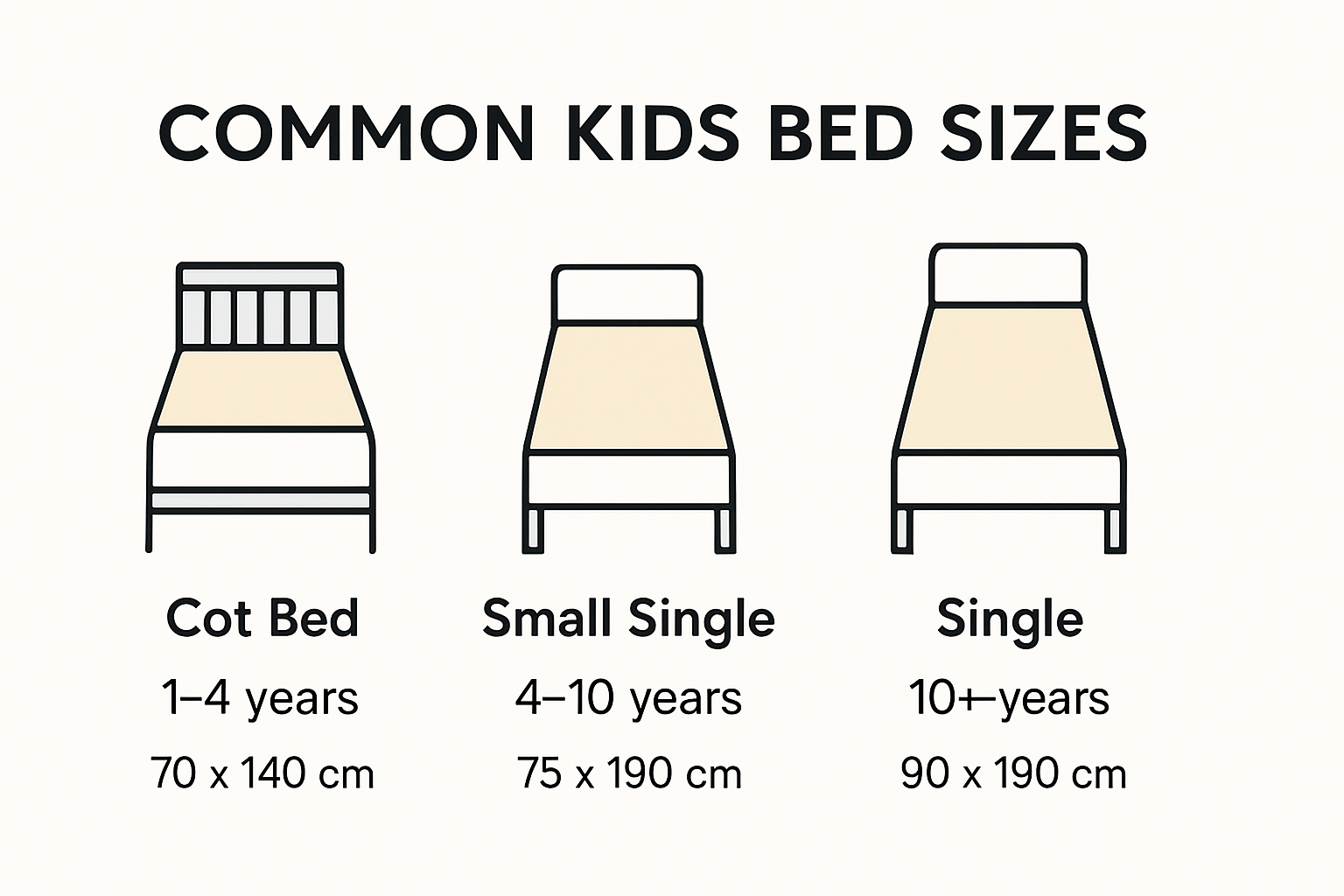
Children’s bed requirements evolve significantly as they grow. According to Bed Advice UK, the standard progression typically involves several key sizes. Cot beds measuring 70cm x 140cm are ideal for children aged 2 to 5 years. These beds offer a transitional space between infant cots and larger child beds, providing a familiar and secure sleeping environment.
As children move beyond the toddler stage, Kids Beds Online recommends small single beds (75cm x 190cm) or standard single beds (90cm x 190cm) for children aged 5 and above. These sizes provide more room for growing bodies and allow children to stretch out comfortably while sleeping.
Bed selection is not just about the child’s size but also about room layout and available space. Great Little Trading Company emphasises the importance of precise measurements. Before purchasing a bed, carefully measure your room’s dimensions, considering factors like wardrobes, windows, and play areas. Some beds offer clever space-saving solutions like integrated storage or pull-out options that can maximise room functionality.
Consider the future when selecting a bed size. A bed that accommodates your child’s growth for several years represents a smart investment. Some parents opt for slightly larger beds anticipating growth spurts, while others prefer modular designs that can be extended or modified as children age.
Beyond physical dimensions, consider your child’s individual sleeping habits. Some children move around more during sleep and might benefit from a slightly wider bed. Others might prefer more compact sleeping spaces that feel secure. Observing your child’s preferences can guide your selection.
Additionally, factor in potential room sharing or future bedroom configurations. Bunk beds or trundle beds might be excellent solutions for families with multiple children or limited space. These designs offer flexibility and can be more cost-effective in the long term.
Remember that comfort extends beyond size. The mattress quality, bed frame stability, and overall design contribute to a good night’s sleep. When learning how to choose kids beds, prioritise options that provide support, safety, and room for individual expression. A well-chosen bed becomes more than just a sleeping surface—it’s a personal sanctuary where your child can rest, dream, and grow.
When learning how to choose kids beds, safety must be the paramount concern. Children spend significant time sleeping and playing in their beds, making it crucial to understand and implement comprehensive safety measures that protect their physical well-being and provide parents with peace of mind.
Bed design plays a critical role in child safety. According to SATRA Technology Centre, UK bed manufacturers must comply with EN 747-1:2024 safety standards. These rigorous regulations specify precise requirements for bed construction, including safe barrier heights, head entrapment prevention, and age-appropriate design specifications. For instance, beds higher than 600 mm are not recommended for children under six years old, ensuring that elevated sleeping surfaces does not pose unnecessary risks.
Special attention must be given to bunk beds and loft-style designs. Sturdy guardrails, secure ladder attachments, and appropriate spacing between bed components are essential. Parents should regularly inspect these structural elements, checking for any signs of wear, loose connections, or potential weak points that could compromise the bed’s integrity.
UK Government guidance provides specific recommendations for bed rail safety. Bed rails must be UKCA, CE, or CE UKNI marked as medical devices, demonstrating compliance with safety regulations. These standards help prevent falls and reduce the risk of children becoming trapped between the mattress and rail.
Entrapment remains a significant concern for parents. Ensure bed rails have minimal gaps and are correctly installed, with no space where a child’s head or limbs could become stuck. Some modern bed designs incorporate innovative safety features like curved edges, padded surfaces, and integrated protective mechanisms that minimise potential hazards.
Cutting-edge research continues to improve child bed safety. The NHS Health Research Authority’s SAFEBED Study explores how enclosed bed systems might enhance overnight safety for children with specific developmental needs. These studies demonstrate an ongoing commitment to understanding and mitigating potential risks associated with children’s sleeping environments.
Material selection also contributes to safety. Choose beds constructed from non-toxic, flame-retardant materials that meet stringent UK safety standards. Smooth edges, rounded corners, and robust construction help prevent injuries during active play or restless sleeping.
When learning how to choose kids beds, remember that safety is an ongoing process. Regular maintenance, age-appropriate design, and vigilant supervision are key. A safe bed provides more than physical protection—it creates a secure, comfortable space where children can rest, grow, and develop with confidence.
Ultimately, the right bed combines structural integrity, thoughtful design, and a deep understanding of children’s unique physical and developmental needs. By prioritising safety, parents can create a sleeping environment that supports their child’s health, comfort, and peace of mind.
When learning how to choose kids beds, balancing available space and financial constraints becomes a critical aspect of the decision-making process. Thoughtful planning can help parents select a bed that not only meets their child’s needs but also fits seamlessly into their home environment and budget.
Home Building UK recommends innovative strategies for maximising limited space. Vertical design solutions can transform seemingly cramped rooms into functional sleeping areas. Loft beds and bunk beds with integrated storage or study areas offer exceptional space-saving capabilities. These multi-functional designs allow parents to maximise floor space, creating room for play, study, and storage without compromising on comfort.
Placement is equally important. Positioning beds against walls and avoiding locations near windows with potential draughts can optimize room layout. Three Interior Design suggests considering built-in joinery and custom solutions that utilize every inch of available space, particularly in rooms shared by siblings or with challenging architectural configurations.
Budget considerations need not limit your choices. Many manufacturers offer modular bed systems that can grow with your child, representing a smart long-term investment. Look for beds with convertible features—such as removable side rails, adjustable lengths, or the ability to transform from a junior to a full-sized bed. These options provide excellent value, reducing the need for frequent replacements as your child grows.
Consider second-hand or refurbished options from reputable sources. Quality wooden beds can be professionally restored, offering significant savings without compromising safety. Online marketplaces and specialist children’s furniture retailers often provide certified pre-owned beds that meet current safety standards at a fraction of the original cost.
Beyond the bed itself, factor in additional expenses such as mattresses, bedding, and potential room modifications. Some bed designs include built-in storage or desk areas, potentially offsetting additional furniture costs. Measure your room carefully, considering not just the bed’s footprint but also necessary circulation space and future room configurations.
Consider seasonal sales, manufacturer promotions, and bundle deals that can provide substantial savings. Many retailers offer package deals including mattresses and accessories, which can significantly reduce overall expenses. Online comparison tools and showroom demonstrations can help you make an informed decision that balances quality, functionality, and affordability.
Remember that investing in a well-designed bed is more than a purchase—it’s creating a personal space where your child will rest, play, and grow. By carefully considering space limitations and budget constraints, you can find a solution that provides comfort, safety, and long-term value. The perfect bed is not about spending the most money, but about making the most intelligent choice for your child’s unique needs.
For toddlers, a cot bed with side guards is ideal, transitioning them from cots to a more independent sleeping arrangement while ensuring safety.
Consider the child’s age and height. A cot bed is suitable for ages 2-5 years, while small single beds (75cm x 190cm) or standard single beds (90cm x 190cm) are recommended for children aged 5 and above, allowing enough room for growth.
Ensure that the bed complies with safety standards, has secure guardrails for elevated beds, stable construction, and rounded edges to prevent injuries. Regular inspections for wear and tear are also important.
Choose space-saving designs such as loft beds or bunk beds with integrated storage to create more floor space. Position beds against walls and opt for multi-functional furniture to enhance usability in smaller rooms.
Finding the perfect bed for your child can be a daunting task, especially when balancing safety, comfort, and space efficiency. With diverse options like bunk beds and loft beds, and realising the importance of age-appropriate designs, the choices can quickly become overwhelming. But don’t worry—at Number One Beds, we’ve tailored our collection to meet these exact needs, ensuring your child sleeps safely and soundly as they grow.
Explore our exclusive range of kids’ beds that combines fun with practicality, allowing you to choose from single beds, bunk beds, and even novelty designs that will delight your little ones. Our beds are designed to adapt to their growing needs while integrating clever storage solutions to help you maximise space in their bedrooms. Don’t hesitate—enhance your child’s sleep environment today! Visit https://numberonebeds.com and discover how easy it is to elevate their bedtime experience. Because every child deserves a bed they love!
