Choosing the right bunk bed can transform any small space into a comfortable sleeping haven. It might surprise you that over 60 percent of families with children aged 5 to 12 prefer bunk beds for their versatility. But here’s the twist: selecting a bunk bed is not just about choosing a cozy design. It’s an intricate puzzle where size, safety, and material all play a vital role. Discover how to navigate this crucial buying decision to ensure safety and satisfaction for years to come.
| Takeaway | Explanation |
|---|---|
| Measure Your Space | Accurately measure the room’s dimensions, including ceiling height and surrounding clearance, to ensure the bunk bed fits and meets safety recommendations. |
| Prioritise Safety Features | Look for robust guardrails, a well-designed ladder, and fire safety compliance to protect users from accidents and hazards. |
| Choose the Right Type and Style | Select a bunk bed type that meets both functional needs and aesthetic preferences, considering configurations that maximise space and adaptability for different users. |
| Assess Materials for Durability | Opt for high-quality materials such as hardwoods or metal for enhanced structural integrity, and prioritise sustainable options to support environmental considerations. |
Choosing the right bunk bed size involves more than just measuring a room. It requires a strategic approach that balances spatial constraints, user needs, and safety considerations. Understanding the precise dimensions and spatial requirements can make the difference between a functional sleeping solution and an uncomfortable, potentially hazardous arrangement.
Before selecting a bunk bed, thorough room measurement is crucial. Standard UK bunk beds typically come in single mattress sizes of 90 x 190 cm, but the total bed footprint will be significantly larger. You’ll need to account for not just the bed’s length and width, but also its height and surrounding clearance. British Furniture Manufacturers recommend leaving at least 60-75 cm of additional space around the bed for safe movement and accessibility.
Key measurement considerations include:
UK safety regulations are stringent when it comes to bunk bed dimensions. The 2024 European Standard EN 747 specifies precise requirements for bunk beds, including:
These regulations are designed to prevent entrapment hazards and ensure structural integrity. When measuring your space, you’ll want to confirm that your chosen bunk bed not only fits physically but also complies with these critical safety standards.
Bunk bed sizes vary considerably, from compact single designs perfect for children’s rooms to larger configurations suitable for teenagers or guest spaces. UK Furniture Sizing Guidelines suggest considering the following size ranges:
Remember that the right size isn’t just about fitting the mattress—it’s about creating a comfortable, safe sleeping environment that meets the specific needs of the users. Carefully assess who will be using the bunk bed and their individual space requirements before making a final selection.
Bunk bed safety transcends mere structural design—it represents a critical commitment to protecting children and users from potential accidents. With children’s furniture presenting unique risks, understanding comprehensive safety features becomes paramount for responsible purchasing decisions.
Guardrails represent the most fundamental safety mechanism in bunk bed design. British Furniture Research Association guidelines specify that guardrails must be robust, continuous, and provide complete enclosure on all exposed sides of the upper bunk. The updated 2024 British standard EN 747 mandates specific requirements:
Additionally, structural connections must be secure, using high-quality fasteners that prevent accidental disassembly and maintain long-term stability.
Ladder construction is another critical safety component often overlooked by consumers. UK Safety Regulations emphasise ladder design must accommodate safe, predictable climbing mechanics. Key safety features include:
Parents should inspect ladder connections regularly, ensuring they remain tight and show no signs of structural fatigue or wear.
Recent UK Furniture Safety Regulations have significantly enhanced fire safety standards for children’s furniture. When selecting a bunk bed, prioritise models that demonstrate comprehensive fire-retardant properties:
Beyond regulatory compliance, parents should also consider additional protective measures such as positioning bunk beds away from potential fire hazards like heaters, curtains, or electrical outlets. Smoke detectors near sleeping areas provide an extra layer of protection, creating a holistic approach to child safety.
Selecting the right bunk bed type goes beyond aesthetic preferences—it involves understanding how different designs accommodate specific spatial requirements, user needs, and functional objectives. Each bunk bed style offers unique advantages and potential limitations that can significantly impact room functionality and user experience.
UK Furniture Specialists identify several standard bunk bed configurations that cater to diverse household needs. Traditional side-by-side bunk beds represent the most straightforward design, featuring two beds stacked vertically with a centrally positioned ladder. These models work exceptionally well in children’s bedrooms and shared spaces with limited square footage.
Additional classic configurations include:
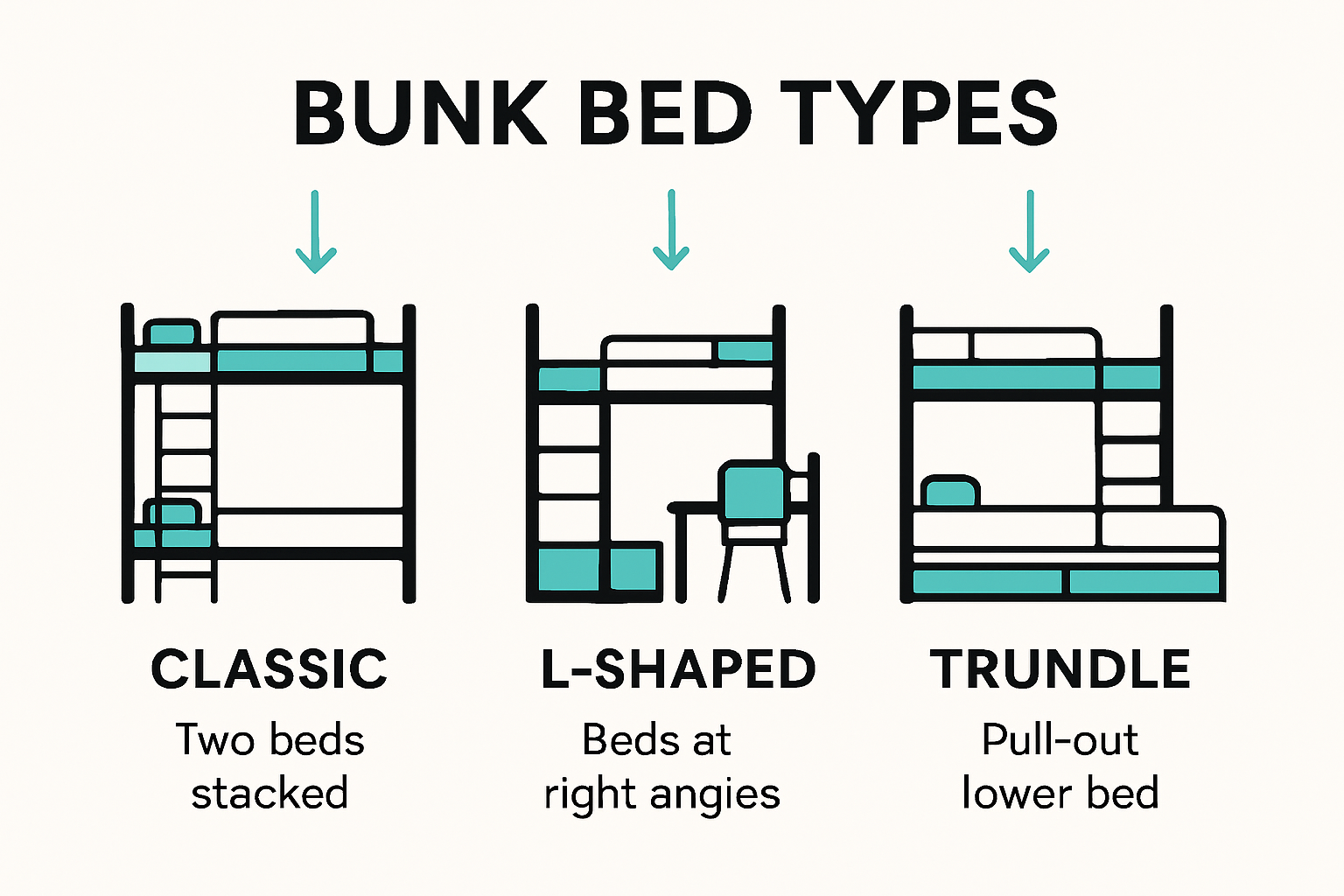
Land of Beds highlights emerging bunk bed styles that transform sleeping areas into multifunctional spaces. Loft beds, or high sleepers, represent a particularly clever solution for compact living environments. These designs elevate the sleeping surface, creating valuable underneath space for study areas, storage, or additional furniture.
Advanced design variations include:
Beyond standard configurations, some bunk bed styles cater to specific demographic needs. Families with varied age ranges might benefit from convertible bunk beds that can be separated into individual single beds. For households with frequent guests or growing children, modular designs offering adaptable configurations provide long-term value.

Key specialised considerations include:
Ultimately, choosing the right bunk bed style requires carefully balancing practical requirements with aesthetic preferences. Consider room dimensions, user age, intended functionality, and potential future adaptability when making your selection.
Selecting the right materials for a bunk bed involves more than aesthetic considerations—it represents a critical decision impacting durability, safety, longevity, and overall performance. Understanding the nuanced characteristics of different materials enables informed purchasing decisions that balance quality, sustainability, and functional requirements.
Sustainable Furniture Research indicates various wood types offer distinct advantages. Hardwoods like oak and maple provide exceptional structural integrity, while softer woods such as pine offer more affordable alternatives. Emerging sustainable options like bamboo demonstrate remarkable properties:
Each wood type presents unique characteristics affecting the bunk bed’s overall performance, requiring careful evaluation based on specific household needs.
Metal bunk beds, typically constructed from steel or aluminium, offer alternative material benefits. Heavy Duty Bunk Bed Manufacturers emphasise metal’s potential for enhanced structural reliability and weight distribution. Composite materials increasingly provide innovative solutions combining multiple material properties:
Metallic constructions often provide superior load-bearing capabilities and require minimal maintenance compared to traditional wooden structures.
United Nations Environmental Programme recommendations highlight the importance of selecting materials that balance environmental responsibility with structural performance. Considerations extend beyond immediate aesthetic preferences:
Consumers should prioritise materials demonstrating robust construction techniques, quality joinery, and consistent manufacturing standards. Examining connection points, assessing material grain or welding quality, and understanding load-bearing specifications becomes crucial in making an informed selection that guarantees both safety and longevity.
The size of the bunk bed depends on your child’s age and room dimensions. Standard single bunk beds are typically 90 x 190 cm, while small double sizes are 120-135 x 190 cm. Always ensure that the bed fits comfortably in the space with sufficient clearance around it.
To ensure the safety of a bunk bed, look for robust guardrails, a well-designed ladder, and compliance with safety standards such as EN 747. Regularly check structural integrity and ensure the mattress fits snugly within the frame without large gaps.
High-quality materials such as hardwoods like oak or maple offer exceptional durability. Metal bunk beds made of steel or aluminium are also strong and require less maintenance. Consider sustainable options like bamboo or reclaimed wood for eco-friendliness.
Innovative designs include loft beds that create additional space underneath, L-shaped bunk beds for corner placement, and trundle options that allow for extra sleeping spaces. These designs maximise functionality without compromising on style.
Choosing the right bunk bed can be a daunting task—balancing size, safety, and style while ensuring it meets your child’s needs is crucial for creating a restful environment. But fear not, because at Number One Beds, we simplify your search! Our selection boasts not just aesthetics but also safety features that meet the latest regulatory standards, so you can rest easy knowing your little ones are secure and sound.
Explore our wide range of children’s beds, from fun bunk designs that save space to sturdy options that grow with your child. We know that every detail counts, which is why we also provide a collection of high-quality mattresses tailored for optimal support and comfort. You no longer need to compromise on quality or style!
Don’t wait! Visit Number One Beds today and discover everything you need to ensure your child sleeps better and more safely—because every good night’s sleep starts with the right bed. Let’s create a bedroom environment they love coming home to!
