
Choosing a bed for your child might seem simple, but there is a lot more at stake than picking out something that matches the curtains. Beds that don’t comply with British Safety Standard BS 8509:2008+A1:2011 can pose real risks, as static gaps over 6 cm are a common cause of home accidents. Surprising as it sounds, the bed’s appearance or size is rarely the biggest issue parents get wrong. The real secret is that material quality, safety standards and thoughtful ergonomic design shape how well your child sleeps and just how safe they are, both now and as they grow.
| Takeaway | Explanation |
|---|---|
| Select the Appropriate Bed Size | Choose a bed that accommodates your child’s age, growth potential, and room dimensions to ensure comfort and effective space usage. |
| Prioritise Safety Standards | Ensure beds comply with safety regulations, such as BS 8509:2008+A1:2011, including secure structures and appropriate gap measures to prevent accidents. |
| Evaluate Material Quality | Opt for beds made from durable materials like hardwoods or metal, ensuring they are free from sharp edges and constructed to withstand active use by children. |
| Consider Ergonomic Design | Look for beds that support healthy sleep postures and include features like adjustable frames or integrated storage to adapt to your child’s needs. |
| Regular Safety Inspections | Perform monthly checks on bed structural integrity, clear potential hazards, and ensure that the sleep environment remains safe as your child grows. |
Selecting the perfect bed for your child involves more than just picking a design that looks appealing. The right bed size can significantly impact your child’s comfort, sleep quality, and room functionality. Understanding children’s bed sizes becomes crucial for parents navigating this important decision.
In the UK, children’s bed sizes vary to accommodate different age groups and room configurations. According to Bed Advice UK, parents have several standard options to consider:
Choosing the right bed involves evaluating multiple considerations beyond simple measurements. Great Little Trading Company recommends considering several critical factors:
Room dimensions play a pivotal role in bed selection. Measure the available space carefully, ensuring enough room for movement, additional furniture, and potential play areas. A bed that overwhelms the room can make the space feel cramped and uncomfortable.
Child’s age and growth potential are equally important. While a small single bed might work perfectly for a 4-year-old, an 8-year-old might require more substantial sleeping space. Consider beds that offer longevity and adaptability.
Mattress depth is another crucial consideration. Children’s mattresses should be thinner compared to adult mattresses, ensuring safety and ease of use. A mattress that’s too thick can make it challenging for younger children to get in and out of bed independently.
Budget and potential future needs should also guide your decision. Investing in a slightly larger bed might prove more economical in the long run, as it can accommodate your child’s growth and potentially reduce the need for frequent replacements.
Practical tip: Always leave some additional space around the bed for movement, ensuring your child can comfortably navigate their bedroom without feeling restricted. A good rule of thumb is to maintain at least 60-75 cm of clearance around the bed’s perimeter.
Remember that every child is unique, and what works for one might not be ideal for another. Take time to discuss bed preferences with your child, considering their comfort and personal space requirements. This collaborative approach can help make the bed selection process more engaging and successful.
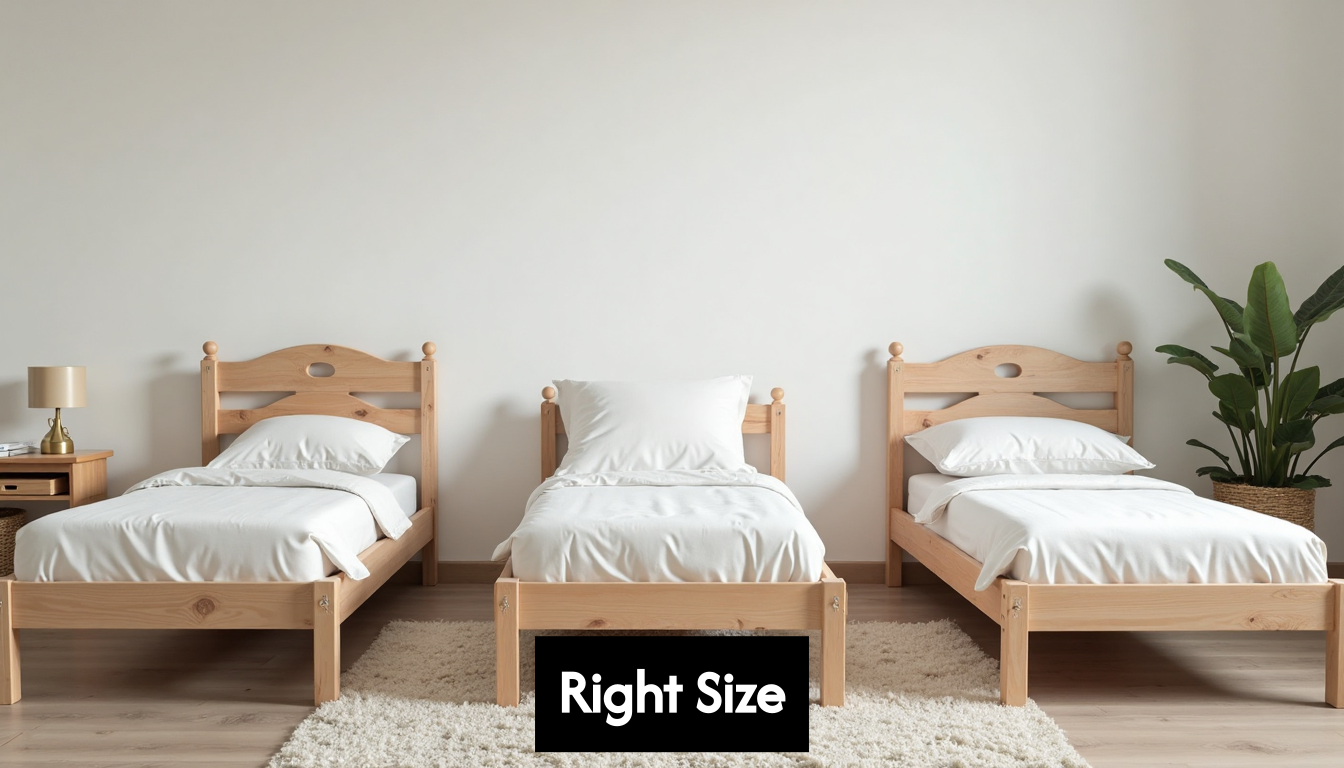
Ultimately, the right bed size balances practical considerations with your child’s comfort and room’s spatial constraints. By carefully evaluating these factors, you can select a bed that supports restful sleep and adapts to your child’s evolving needs.
When investing in a children’s bed, parents must look beyond aesthetics and consider multiple critical factors that ensure safety, comfort, and long-term functionality. A comprehensive approach to bed selection involves understanding key design elements and safety standards specific to children’s bedroom furniture.
Safety remains the paramount consideration when selecting a children’s bed. According to Room to Grow, specific British safety standards govern children’s bed design. For instance, toddler beds must comply with BS 8509:2008+A1:2011, which establishes rigorous guidelines for structural integrity and child protection.
Key safety specifications include:
For bunk beds, additional safety requirements become crucial. Happy Beds emphasizes the importance of raised side railers and fixed ladders, with manufacturers often specifying minimum age requirements for upper bunk usage.
Beyond safety, material selection plays a significant role in bed longevity and performance. Wooden beds offer excellent durability and can withstand children’s active usage. Hardwoods like beech and oak provide superior strength compared to softer timber options. Metal frames present another robust alternative, particularly for older children who might require more structural resilience.
Consider these material evaluation criteria:
Parents should inspect bed frames for sturdy joints, secure connections, and absence of sharp edges. A well-constructed bed not only ensures child safety but also represents a long-term investment that can potentially serve multiple children or transition through different growth stages.
Ergonomic considerations extend beyond basic safety measurements. The bed should support healthy sleep postures and accommodate natural growth patterns. Adjustable bed frames or modular designs offer flexibility, allowing parents to modify sleeping arrangements as children develop.
Additional comfort considerations include:
Consider beds with rounded edges, smooth transitions, and thoughtful design elements that minimize potential injury risks. Some modern children’s beds incorporate clever design features like built-in guardrails, integrated storage, or convertible configurations that grow alongside your child.
Ultimately, selecting the right children’s bed requires balancing multiple factors: safety standards, material quality, ergonomic design, and potential long-term utility. By approaching the selection process comprehensively, parents can invest in a bed that provides comfort, security, and adaptability throughout their child’s developmental journey.
Navigating the world of children’s beds can feel overwhelming with numerous options available. Understanding the various bed types helps parents make informed decisions that align with their child’s age, room space, and developmental needs.
Children’s bed progression typically begins with specialized designs tailored to specific age ranges. According to Happy Beds, the primary bed types include:
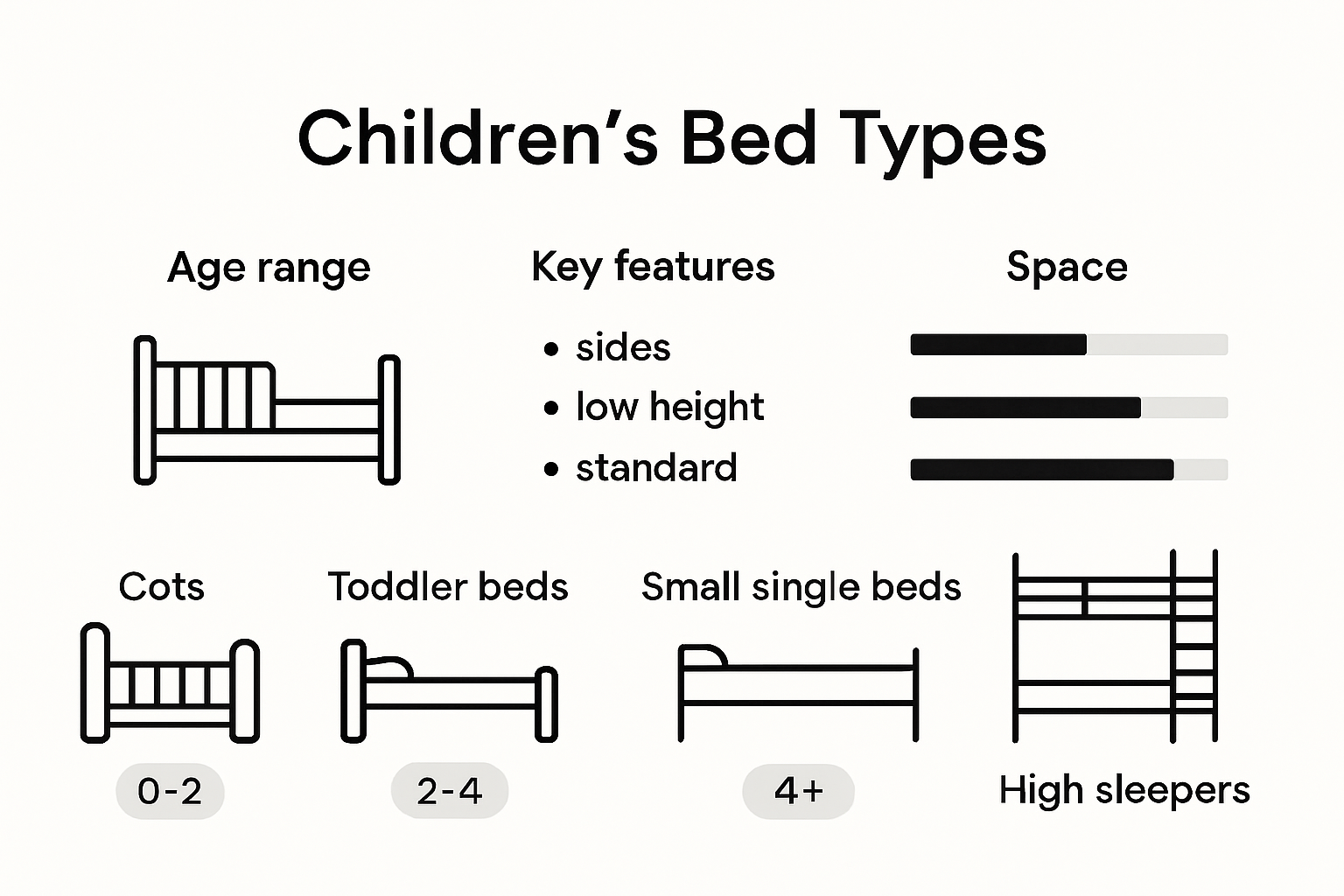
Room to Grow highlights several advanced bed configurations that cater to older children’s evolving needs:
Bunk Beds
Traditional bunk beds feature two sleeping platforms stacked vertically, perfect for shared rooms or maximizing floor space. Modern variations include:
Mid Sleepers and Cabin Beds
These innovative designs combine sleeping areas with functional spaces. Noa and Nani emphasizes their versatility, often incorporating:
High Sleepers and Loft Beds
Designed for maximizing vertical space, these beds elevate the sleeping area, creating substantial usable space underneath for:
Beyond standard configurations, specialty beds offer unique solutions for specific needs:
When selecting a bed, consider not just current needs but potential future requirements. A well-chosen bed can serve multiple purposes and adapt to your child’s changing lifestyle. Factor in room dimensions, child’s age, personal preferences, and budget to make the most appropriate selection.
Remember that each bed type offers unique advantages. The perfect choice balances practical considerations with your child’s comfort, safety, and individual personality. Take time to explore options, involve your child in the decision, and prioritize designs that promote healthy sleep and enjoyable bedroom experiences.
Ensuring a child’s safety while sleeping involves more than selecting an appropriate bed. Parents must implement comprehensive safety strategies that protect children from potential hazards and create secure sleeping environments.
Baby More emphasizes critical structural safety standards for children’s beds. Key measurements and guidelines include:
For bunk beds, additional structural precautions become crucial. Rachael Wilson Sleep Consultant recommends specific safety protocols:
Mattress selection plays a pivotal role in child safety. According to Theraposture, critical considerations include:
Additional bedding safety recommendations:
Beyond physical bed design, parents can implement additional safety strategies:
Children’s sleep environments require constant monitoring. As children grow and become more active, safety requirements will evolve. What works for a toddler may not be appropriate for a school-aged child.
Create a safety checklist and perform monthly inspections of the bed and surrounding area. Look for signs of wear, potential structural weaknesses, or changes in your child’s sleeping habits that might indicate discomfort or safety concerns.
Parental vigilance combined with adherence to safety standards provides the most comprehensive protection. Remember that each child is unique, and safety strategies should be tailored to individual developmental stages and specific bedroom configurations.
Ultimately, a safe sleeping environment promotes not just physical protection but also provides peace of mind for parents and contributes to a child’s healthy sleep patterns and overall well-being.
Choosing the right size bed depends on your child’s age and growth potential. For younger children, a small single bed (75 x 190 cm) is suitable. As they grow, a standard single bed (90 x 190 cm) or small double bed (120 x 190 cm) may be more appropriate. Always measure the room to ensure there’s enough space for movement and other furniture.
To ensure your child’s bed is safe, look for products that comply with British Safety Standard BS 8509:2008+A1:2011. Check for secure structures, ensure static gaps do not exceed 6 cm, and verify that the bed has no sharp edges. Regular inspections of the bed’s structural integrity are also crucial.
Ergonomically designed beds support healthy sleep postures, which are crucial for a child’s development. Features like adjustable frames and built-in storage can enhance comfort and usability, allowing the bed to adapt as your child grows.
For children’s beds, durable materials like hardwood or metal are recommended. Ensure that the bed has smooth, splinter-free surfaces and is treated with non-toxic finishes. A high-quality construction will withstand active use and last through multiple childhood stages.
Navigating the world of children’s beds can be overwhelming! Choosing the right size, ensuring safety compliance, and finding durable yet comfortable options are paramount for every parent. That’s why at Number One Beds, we offer a diverse range of children’s beds designed to cater to all these needs—ensuring a safe, stylish, and inviting sleep environment.

With our collection featuring everything from compact small singles to imaginative novelty beds, you’re bound to find a perfect fit for your child’s sleep space. Plus, each product adheres to the highest safety standards, so you can rest easy knowing your little one is secure. Don’t compromise on comfort; explore our range now and transform bedtime into a joyful experience! Visit us today at https://numberonebeds.com and give your child the restful sleep they deserve.
